Final Boarding Call: The Last 25 Years (1955-1979)
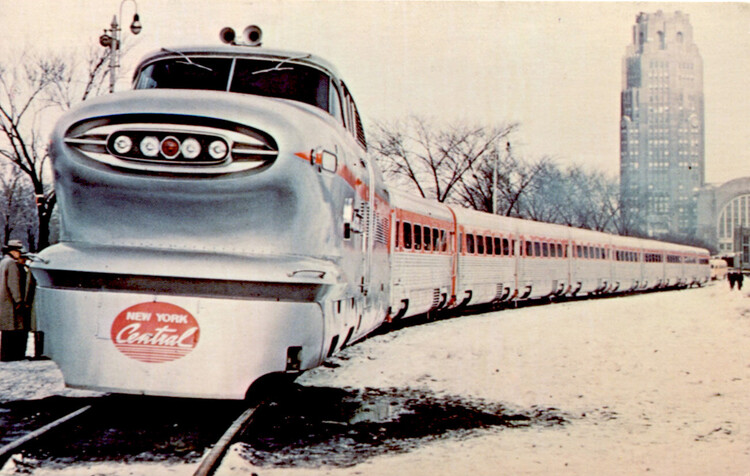
In the 1950s, with railroad travel in sharp decline, New York Central Railroad drastically reduced passenger service. Like others in the industry, it stopped investing in equipment, services, and stations. Facing declining revenues, the railroad put over 400 stations up for sale in 1956. It tried to sell the Central Terminal for $1 million— less than seven percent of its original cost—but failed to find a buyer. Three years later, New York State allowed New York Central to abandon rail service between Buffalo and Niagara Falls.
As the operating costs outran profits, New York Central tried to reduce taxes and cut maintenance costs by demolishing several of the structures that contributed to the Central Terminal’s success as a railroad hub. In 1966, the Pullman Service Building, Coach Shop, Ice House, and the three-story power plant were demolished.
In 1968, New York Central and Pennsylvania Railroads merged to form the Penn Central System, the Central Terminal’s second owner. Two years later, with Penn Central -- the largest railroad in the northeast -- on the verge of bankruptcy, Congress stepped in, fearing the collapse of the entire industry. In 1971, Amtrak, a newly created quasi-public corporation, took over most intercity passenger service. Amtrak made the Central Terminal its Buffalo hub, assuming responsibility for passenger operations, heating, and lighting. However, the station, like many others, faced ongoing funding shortfalls for maintenance and improvements.
In 1976, Penn Central, Lehigh Valley, Erie-Lackawanna, and Lehigh & Hudson River railroads merged to form Conrail, the Central Terminal’s third owner. By 1979, this beloved Central Terminal and the surrounding area showed signs of long-term economic disinvestment.
By October 1979, only eight trains per day pulled in and out of the New York Central Terminal, down from about 200 at its peak. On Oct. 28, Amtrak abandoned the Buffalo Central Terminal. The last train left the station that morning at 4:10. It should be noted that, in an ironic twist, the first train to ever leave the station was traveling eastward, while the last train to leave, Amtrak’s Lake Shore Limited, was traveling westward.
Fifty years, 4 months and 6 days after it opened, the once magnificent Central Terminal closed its doors.
Photo courtesy of Wikimedia Commons.
-
An Introduction to the Tour
-
Meet the Narrator: Drew Canfield
-
Welcome to Buffalo Central Terminal
-
Meet the Narrator: Dr. Ursuline Bankhead
-
The Rise of Buffalo's Railways
-
Meet the Narrator: Thea Hassan
-
Location, Location, Location
-
Meet the Narrator: Terry Alford
-
Moved by Community: East Side Evolution
-
The Big Build: 1926-1929
-
An Art Deco Icon
-
BONUS: The Grandest of Openings
-
BONUS: The Way Things Were
-
Meet the Narrator: Robby Takac
-
A Welcoming Sight: The Entry Plaza
-
Meet the Narrator: I'Jaz J'aciel
-
BONUS: Mafia Ties
-
What’s In a Name? The Connecting Streets
-
The Jewel: The Main Terminal Building
-
A Vision of Beauty: The Passenger Concourse
-
Waiting Never Felt So Good
-
A Passenger’s Point of View
-
Mail, Packages, and Baggage Galore
-
Neither Snow nor Rain nor Heat nor Gloom of Night…
-
The First Building: Railway Express Agency Terminal Building
-
Easy Access: The Train Concourse and Platforms
-
Open For Business: The First 25 Years (1929-1954)
-
BONUS: A Gateway For Black Americans
-
BONUS: The War Years
-
Harbingers of the Coming Collapse
-
Final Boarding Call: The Last 25 Years (1955-1979)
-
A Light at the End of the Tunnel
-
All Aboard for a New Journey