What’s In a Name? The Connecting Streets
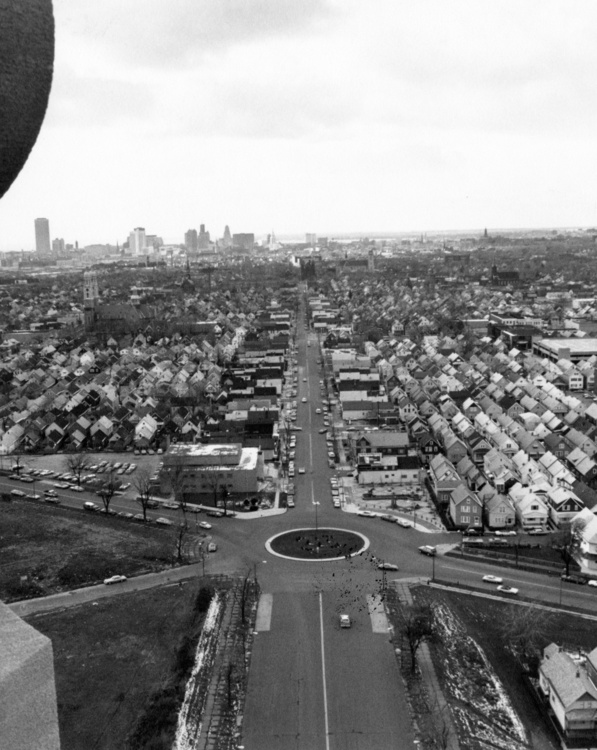
The new train terminal was a work of art, with multiple components that worked together. At the bottom of the long access driveway, which is actually Paderewski Drive, is a traffic circle – a feature that wouldn’t become popular in America for several decades.
The Central Terminal’s designers didn’t create this circle. In fact, it was the work of Buffalo’s first landscape architect, Roeder J. Kinkel. His designs are seen throughout the city, including at Niagara Square, Lafayette Square, and the Buffalo Zoo. In fact, anywhere you look in Buffalo, you’ll see architectural marvels created by legends. Frederick Law Olmsted and Calvert Vaux. Louise Blanchard Bethune. John E. Brent. Frank Lloyd Wright. H.H. Richardson. And so many more.
The Central Terminal’s development was influenced by the system of parks and parkways designed by Olmsted and Vaux in the early 1870s. They upgraded Fillmore Avenue south of Best Street to a parkway. The tree-shaded thoroughfare was to link The Parade (the current Martin Luther King Jr. Park) with proposed new parkland in South Buffalo.
The streets feeding the circle Kinkel created – Memorial Drive and Paderewski Drive – were not originally called by those names. Memorial Drive was called Lindbergh Drive, which was named for aviator Charles Lindbergh. It was built to handle traffic to the new station.
Paderewski Drive, once part of Lovejoy Street, honors Ignacy Jan Paderewski, a renowned pianist and activist for Polish independence who frequently visited Buffalo during the First World War.
Photo courtesy of the Collection of the Buffalo History Museum. General photograph collection, Buildings - Transportation & Storage – Depots.
-
An Introduction to the Tour
-
Meet the Narrator: Drew Canfield
-
Welcome to Buffalo Central Terminal
-
Meet the Narrator: Dr. Ursuline Bankhead
-
The Rise of Buffalo's Railways
-
Meet the Narrator: Thea Hassan
-
Location, Location, Location
-
Meet the Narrator: Terry Alford
-
Moved by Community: East Side Evolution
-
The Big Build: 1926-1929
-
An Art Deco Icon
-
BONUS: The Grandest of Openings
-
BONUS: The Way Things Were
-
Meet the Narrator: Robby Takac
-
A Welcoming Sight: The Entry Plaza
-
Meet the Narrator: I'Jaz J'aciel
-
BONUS: Mafia Ties
-
What’s In a Name? The Connecting Streets
-
The Jewel: The Main Terminal Building
-
A Vision of Beauty: The Passenger Concourse
-
Waiting Never Felt So Good
-
A Passenger’s Point of View
-
Mail, Packages, and Baggage Galore
-
Neither Snow nor Rain nor Heat nor Gloom of Night…
-
The First Building: Railway Express Agency Terminal Building
-
Easy Access: The Train Concourse and Platforms
-
Open For Business: The First 25 Years (1929-1954)
-
BONUS: A Gateway For Black Americans
-
BONUS: The War Years
-
Harbingers of the Coming Collapse
-
Final Boarding Call: The Last 25 Years (1955-1979)
-
A Light at the End of the Tunnel
-
All Aboard for a New Journey