Harbingers of the Coming Collapse
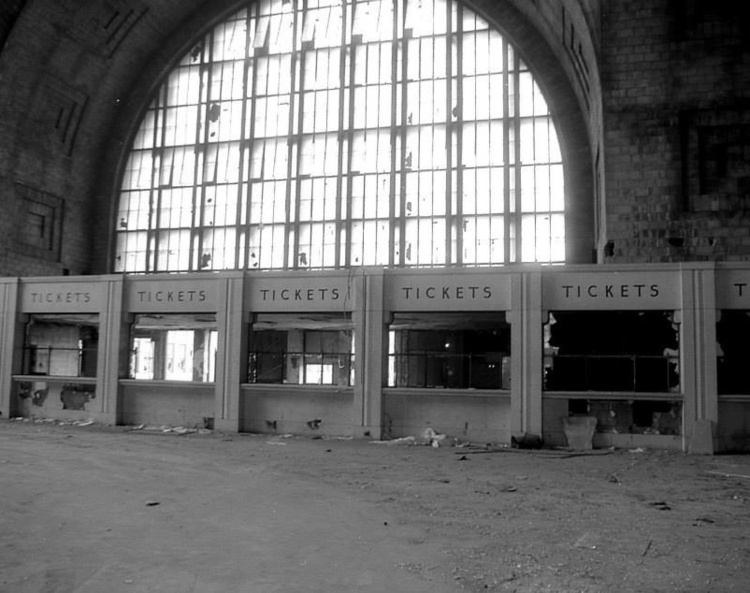
While the Central Terminal served its community and nation, several factors were driving passenger rail service into decline.
In 1916, 98 percent of commercial intercity travelers went by rail, and most of the remainder by inland waterways. By 1950, railroad’s share of the transportation industry had dropped to less than 50 percent, and that number would keep falling. Four primary suspects would cause the near collapse of the rail industry.
Passenger airlines, which had gotten off to a slow start in 1914, began to really take off after the Second World War. Commercial aviation quickly grew, fed by the numbers of post-war pilots looking for jobs. Factories pivoted from military to civilian and cargo aircraft, and planes offered faster delivery of mail and packages.
The other three culprits effectively worked together. After the Second World War, highways began to connect American cities. This made traveling by car more comfortable, leading to a boom in the manufacture and sales of automobiles. The rise of highways also caused a boom in truck delivery companies and long-distance bus companies. All these factors would eventually cause massive declines in moving people and goods by train as rail travel became increasingly seen as outdated and inconvenient.
Photo courtesy of Mark Lewandowski Jr.
-
An Introduction to the Tour
-
Meet the Narrator: Drew Canfield
-
Welcome to Buffalo Central Terminal
-
Meet the Narrator: Dr. Ursuline Bankhead
-
The Rise of Buffalo's Railways
-
Meet the Narrator: Thea Hassan
-
Location, Location, Location
-
Meet the Narrator: Terry Alford
-
Moved by Community: East Side Evolution
-
The Big Build: 1926-1929
-
An Art Deco Icon
-
BONUS: The Grandest of Openings
-
BONUS: The Way Things Were
-
Meet the Narrator: Robby Takac
-
A Welcoming Sight: The Entry Plaza
-
Meet the Narrator: I'Jaz J'aciel
-
BONUS: Mafia Ties
-
What’s In a Name? The Connecting Streets
-
The Jewel: The Main Terminal Building
-
A Vision of Beauty: The Passenger Concourse
-
Waiting Never Felt So Good
-
A Passenger’s Point of View
-
Mail, Packages, and Baggage Galore
-
Neither Snow nor Rain nor Heat nor Gloom of Night…
-
The First Building: Railway Express Agency Terminal Building
-
Easy Access: The Train Concourse and Platforms
-
Open For Business: The First 25 Years (1929-1954)
-
BONUS: A Gateway For Black Americans
-
BONUS: The War Years
-
Harbingers of the Coming Collapse
-
Final Boarding Call: The Last 25 Years (1955-1979)
-
A Light at the End of the Tunnel
-
All Aboard for a New Journey