Soils Beneath Your Feet
Take a look at the ground around you.
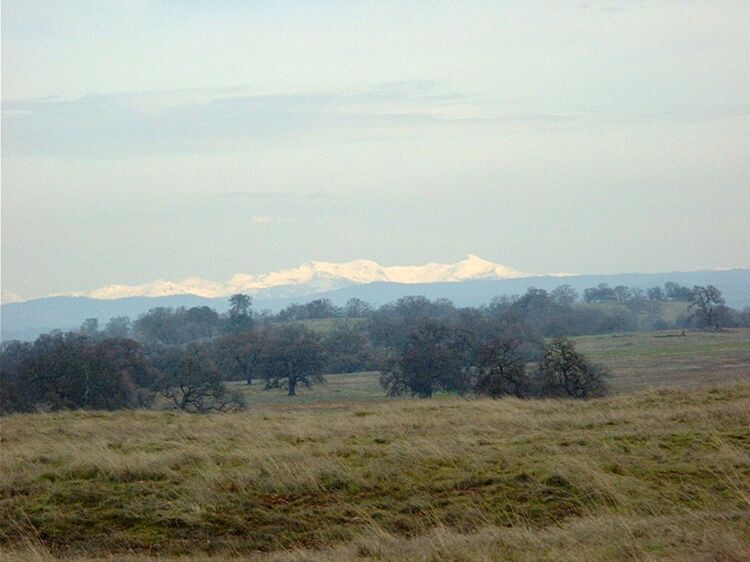
The stones and soils here come from volcanoes, ancient rivers, and eroded mountains. Some of these soils are millions of years old and too hard for tree roots to grow through, which is why grasslands dominate this area.
In this area, three main soil types contribute to the formation of vernal pools:
- Volcanic silica from the eastern Central Valley, forming nutrient-poor acidic terraces.
- Clay hardpan from the western Central Valley, creating dense, alkaline layers.
- Eroded lava flows, like those at Table Mountain near Oroville.
Some of the soils you’re standing on are among the oldest in California, dating back 4 million years. These soils have never been penetrated by tree roots, which is why grasslands dominate this landscape today.
These hard layers trap rainwater, allowing vernal pools to form and remain in place year after year.
Rancho Seco Howard Ranch Trail
-
Introduction to Rancho Seco Howard Ranch Trail
-
History of Rancho Seco
-
Grasslands and California's Changing Landscape
-
Mima Mounds
-
Vernal Pools - What They Are
-
How Vernal Pools Are Different
-
Life In Extreme Conditions
-
Plants of the Vernal Pools
-
Soils Beneath Your Feet
-
Tiny Animals, Big Survival Skills
-
Cows and Vernal Pools
-
Solitary Bees
-
SMUD Mitigation Pools