
Welcome to Eagle Point Colony. As you
drive in, you enter a place with roots that go
back to a 100-acre working farm owned by
Joseph and Hattie Dunipace. The land here
was rich, well-drained, and ideal for
orchards and crops. What is now Colony
Road began as a simple horse-and-buggy
lane leading to the farm. Not far from here,
there was even a small fishing operation,
along with a family cemetery overlooking
the river.
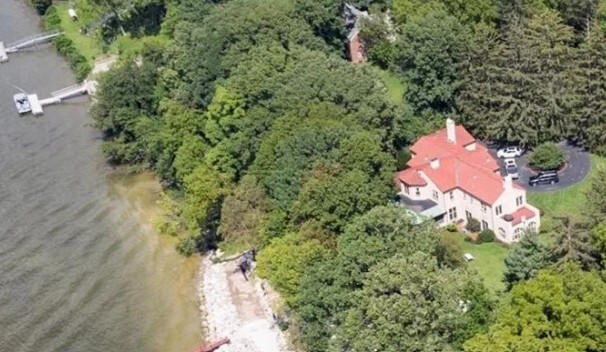
Everything began to change in 1914, when
this property was transformed into what
became Eagle Point Colony—part of a
growing movement toward planned, upscale
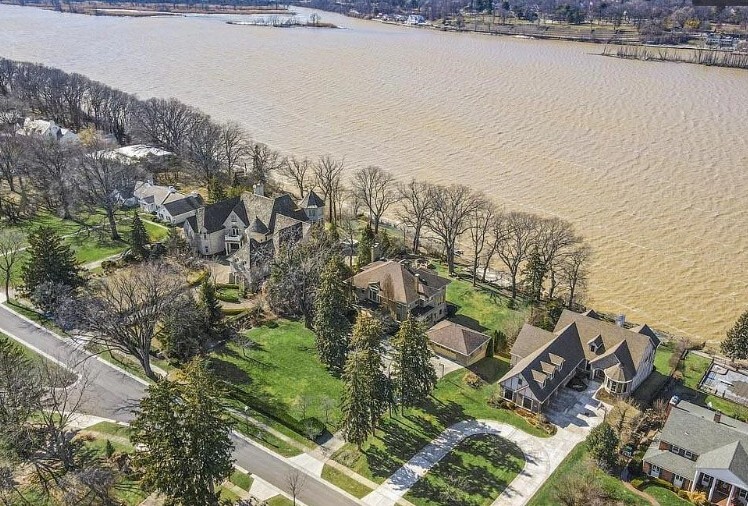
suburban living. The first home was built in
1916, and the entire community was
carefully laid out as an exclusive residential
district across more than 100 acres of
rolling, wooded land high above a bend in
the Maumee River.
The neighborhood was designed by New
York landscape architect William Pitkin,
who emphasized the area’s natural
beauty—its towering trees, shaded hillsides,
and access to the river. Early plans even
included boathouses, making it possible to
travel by water to places like Fort Meigs or
the Toledo Country Club.
The name “Eagle Point” comes from the
high bluff you’re near now, rising 30 to 40
feet above the river. At one time, this was a
favorite nesting spot for eagles.
As the neighborhood developed, Eagle Point
Colony became known for its elegance.
Many of the homes you’ll see were designed
by Toledo architects like George
Rheinfrank, Karl Hoke, and Carl Becker.
The architecture reflects a variety of styles,
including Tudor, Georgian, Mediterranean,
and Craftsman—so each home has its own
distinct character.
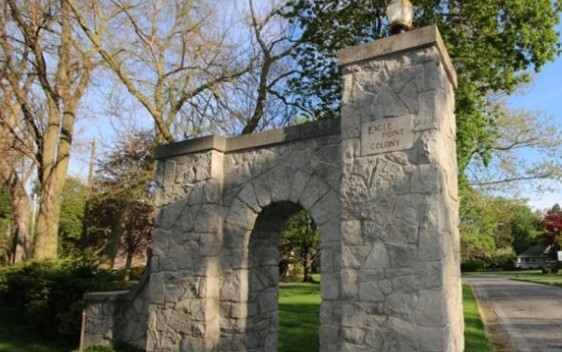
As you enter, take a look at the large stone
archways on Colony Road. These once
supported gates—and even a guard—meant
to keep out curious visitors. Inside the
neighborhood, many homes were built with
features that reflect another era, like carriage
houses, servants’ quarters, grand fireplaces,
and sweeping staircases.
Eagle Point Colony was one of the first
residential communities with public water
and sewer, along with electric and natural
gas. All powerlines were originally required
to be underground.
Over the years, Eagle Point Colony has been
home to many prominent families, including
the Rheinfrank, Bock, Lamson, France,
Walbridge, Ricaby, and Hoke
families—people known for the businesses
they built and the innovations they
contributed.
As we continue, we’ll stop in front of
several of these homes. When you do pull
over, please be respectful of the
homeowners. Feel free to park briefly along
the street, but do not enter driveways.
And don’t forget to notice the landscaping.
Many of the gardens here were designed by
well-known landscape architects, including
Elizabeth Hume and the nationally
recognized Jens Jensen.
In 1983, Eagle Point Colony was added to
the National Register of Historic Places,
helping preserve its story as one of the
region’s most distinctive and thoughtfully
planned communities.