Section 5: Black Cowboys - enslaved and free - used their skills to become Black Ranchers and shaped the legacies of Black ranching families
Ranching and Farming Shaping the Legacies
When I first started farmin’ I taken up some state land, about 80 acres, down on Black Creek, in Medina County. I stayed there ten or twelve years… I raised some corn, sugar cane and watermelons. I commenced with horses, but ‘long ‘way down the line I used oxen some, too. Monroe Brackins to the Federal Writers’ Project, 1936-1938.
Black cowboys – enslaved and free – used their skills to become Black ranchers and shaped the legacies of Black ranching families. Formerly-enslaved Black cowboys continued to work in ranching
and farming after Emancipation. They developed skills and networks to become ranch owners. Even after Emancipation, Black ranchers’ legacies were under constant threat from the Klu Klux Klan and use of the judicial system to steal their property. During Reconstruction and into the early twentieth century there were over 70 Black-owned ranches in one Freedman’s colony in Guadalupe County. Today there is only one.
-
Black Cowboys: An American Story Entry Object & Panel Section 1
-
Section 2: Who Were Black Cowboys? Men & Women
-
Section 2: Who Were Black Cowboys? Children
-
Section 2: Who Were Black Cowboys? Enslaved
-
Section 2: Who Were Black Cowboys? Black Ranchers
-
Section 2: Who Were Black Cowboys? Recovering Black Cowboys Stories
-
Section 2: Who Were Black Cowboys? African Origins.
-
Section 3: Hector Bazy, Black Cowboy
-
Section 4: Black Cowboys Were Integral to the Texas Economy
-
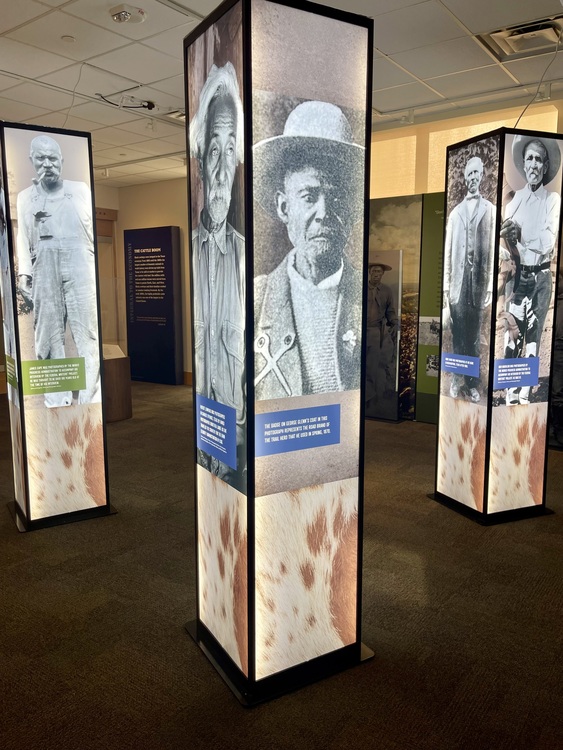
Section 4: Tower Bios of Famous Black Cowboys
-
Section 4: Where did Black Cowboys Work? The Great Cattle Trails
-
Section 4: Essential Cowboy Skills Cooks & Other Jobs
-
Section 4: Wall Bio Hector Bazy
-
Section 4: Wall Bio Nat Love
-
Section 4: Impact of the Cattle Industry
-
Section 4: Monroe Brackins & Jim Perry Bios
-
Section 5: Black Cowboys - enslaved and free - used their skills to become Black Ranchers and shaped the legacies of Black ranching families
-
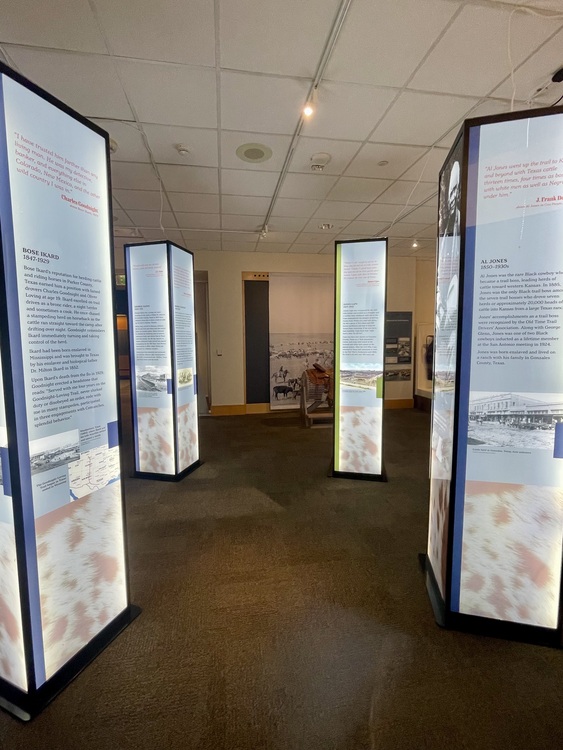
Section 5: Tower Bios of Prominent Black Ranchers & Farmers