

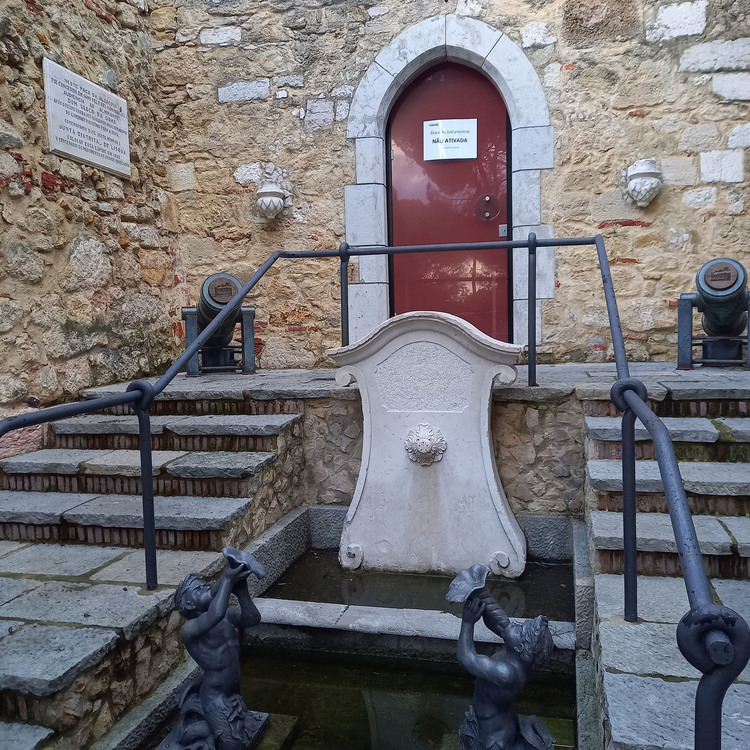
As you came across the arch, you will find a short stone staircase, to the right. On top of those stairs, there is a plaque indicating that this is where the famous navigator Vasco da Gama came to announce to King Manuel that he had discovered the maritime route to India.
However, King Manuel I was also the ruler who decided to later abandon the Palace of the Alcáçova as the royal residence, preferring to transfer the court to the newly built Paço da Ribeira, on the Tagus shore.
Now retrace your steps, and explore the area that goes from where you’re standing back to the main square with King Afonso Henriques statue, next to the Castle’s entrance.
In this area, you will notice there are several elements which look like ancient ruins, with columns and architectural decorative elements spread all around.
This strange ensemble is an important part of the romantic garden, which was in fact only designed and executed during the 1940’s restoration campaign.
Such gardens, which were very popular during the mid-19th century, perfectly served the purpose sought by the fascist regime led by Salazar of emphasizing Portugal’s greatness during the Middle Ages, as well as the affirmation of the Portuguese national identity during the period of the Christian Reconquista.
When you’re done exploring this picturesque area, you can exit the castle through the entrance of the castle.