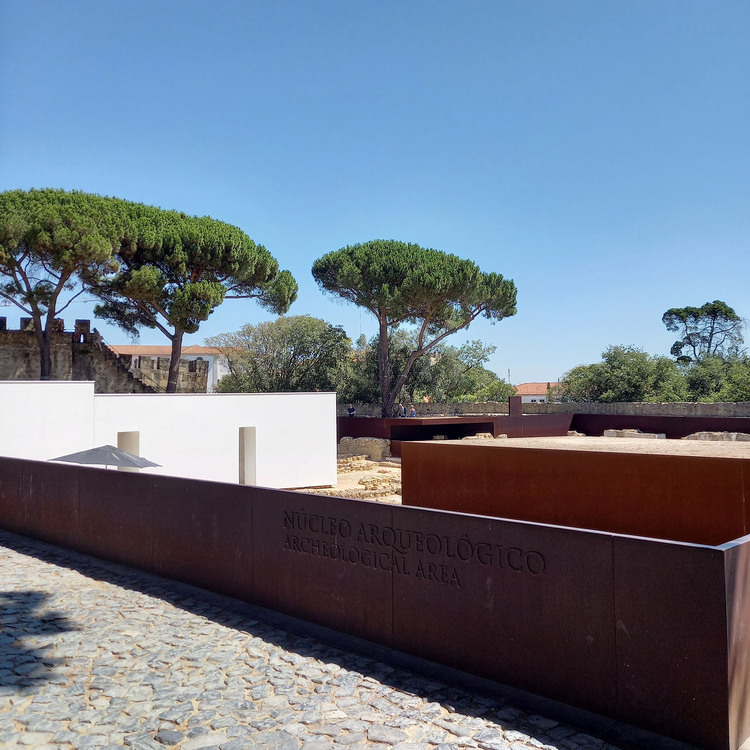
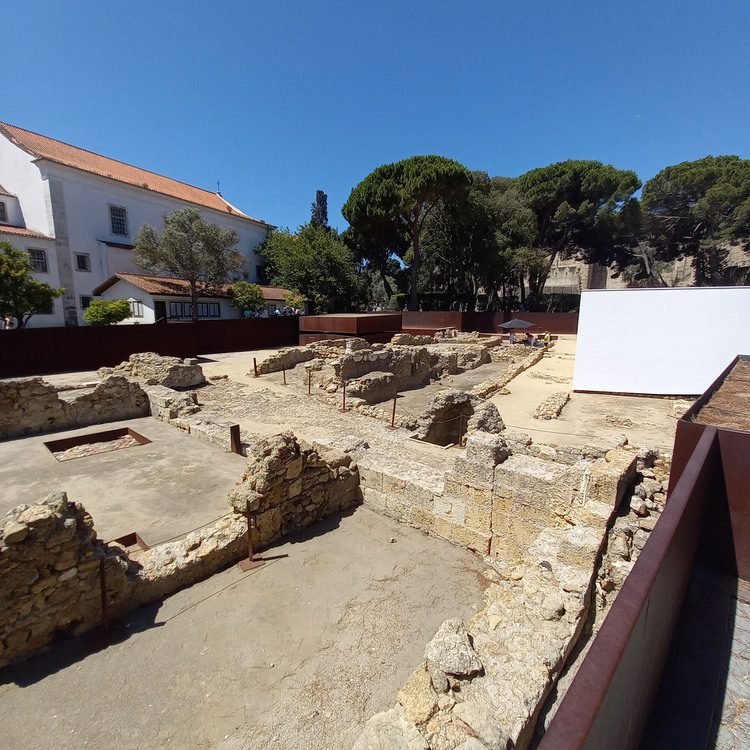
Archaeological Site of the Castle of St George is relatively small square open space concentrates vestiges that cover most of the historical periods of the human occupation of the Castle’s area, going as far back as the Iron Age in the 7th century BC.
Along the iron wall you will find many vestiges of the Islamic quarter that used to occupy this area between the 11th and 12th centuries.
This is where the wealthiest families of al-Us̲h̲būna and the city’s rulers, or “al-qādi”, had their luxurious houses and palaces.
At the far end of this enclosed area, there are remnants of the walls of part of the ancient Royal Palace, which was destroyed by several earthquakes during the 16th century. It is believed that these buildings once harbored the Palace of the bishop of Lisbon, before being integrated into the Palace of the Counts of Santiago, which was also smashed by the big seism of 1755.
On the opposite side of the metal wall, under a small square dome, there are vestiges dating back to the Iron Age, between the 7th and the 3rd century BC.
These consist of small houses’ walls, and elements of a kitchen.
Once you’re done with the exploration of the Archaeological Site, keep going straight and exit through the green metal gate.