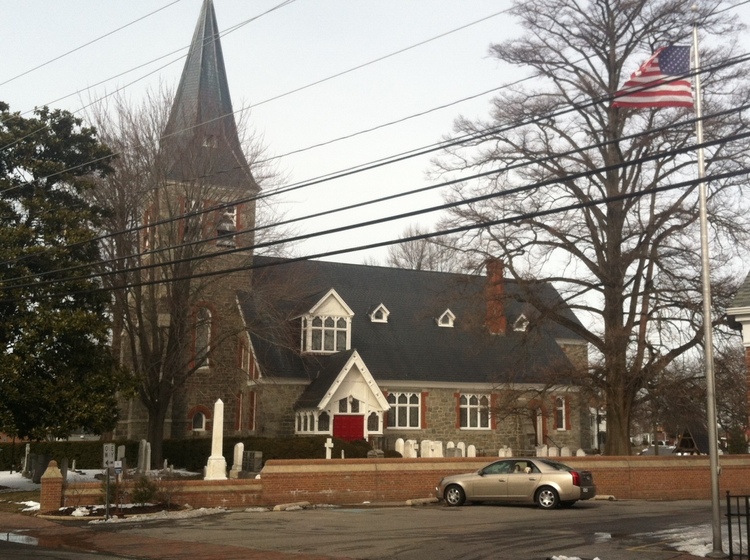
Christ Church (301 South Talbot Street)
Christ Episcopal Church, on your left, is at least the third edifice built for the Saint Michaels Parish that gave the town its name. The first, a wood frame structure, was constructed before 1709. The second, a brick church, was built about 1814. The present Victorian Gothic church was designed by Baltimore architect Henry Congdon and completed in 1878.
Turn right on Green St.
As you proceed up Green Street, Muskrat Park is on your right. Today this is fast land, but 150 years ago this was a marsh where Kirby led his mule across a crude plank bridge to his nearby shipyard.
Then turn left on Locust St.
St. Michaels Drive-by Tour
-
John W. Blades House (108 E. Chestnut Street)
-
St. Michaels Museum (409 St. Mary’s Square)
-
Robert Lambdin House (401 Water Street)
-
Thomas Kirby House (207 Mulberry Street)
-
The Cannonball House (200 Mulberry Street)
-
Christ Church (301 South Talbot Street)
-
Ship Carpenters’ Houses (Locust Street)
-
The Haddaway Shipyard House (103 Locust Street)
-
The Harrison-Bruff House (200 Cherry Street)
-
Robert Dodson House (203 Cherry Street)
-
The Edward N. Dodson House (103 Cherry Street)
-
Conclusion