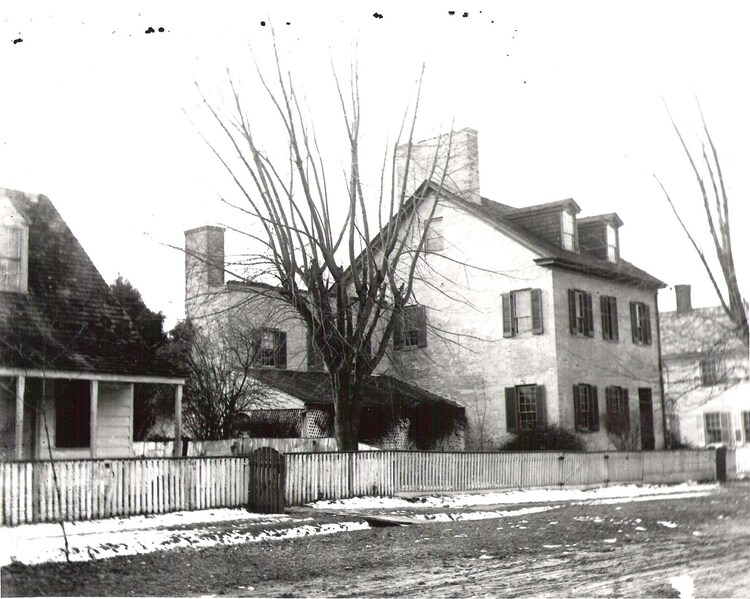
The Cannonball House (200 Mulberry Street)
Ahead on your left this two-and-a-half story Flemish and common bond brick dwelling is the finest example of Federal period architecture in Saint Michaels. Built around 1805 to 1810 by prosperous shipbuilder William Merchant, it gained its name as the Cannonball House during the British attack on Saint Michaels. Alerted by a British deserter, the local militia had mustered to defend the town and its valuable shipyards. Under cover of early morning darkness on August 10, 1813, the 14-gun British brig Conflict moved up the Miles River with 11 smaller boats, sending a landing party ashore just south of the harbor. The landing party overran a small battery guarding the mouth of the harbor and, after exchanging fire, returned to their boats and proceeded to cannonade the town. The local militia returned fire from two artillery companies. During the exchange, one cannonball is said to have grazed the chimney of this house, pierced the southwest dormer, and rolled down the interior stair. In the end, the town was successfully defended as reported by the militia commander General Perry Benson, “some of the houses were perforated, but no injury to any human being.”
Turn right on Church St.
-
John W. Blades House (108 E. Chestnut Street)
-
St. Michaels Museum (409 St. Mary’s Square)
-
Robert Lambdin House (401 Water Street)
-
Thomas Kirby House (207 Mulberry Street)
-
The Cannonball House (200 Mulberry Street)
-
Christ Church (301 South Talbot Street)
-
Ship Carpenters’ Houses (Locust Street)
-
The Haddaway Shipyard House (103 Locust Street)
-
The Harrison-Bruff House (200 Cherry Street)
-
Robert Dodson House (203 Cherry Street)
-
The Edward N. Dodson House (103 Cherry Street)
-
Conclusion