


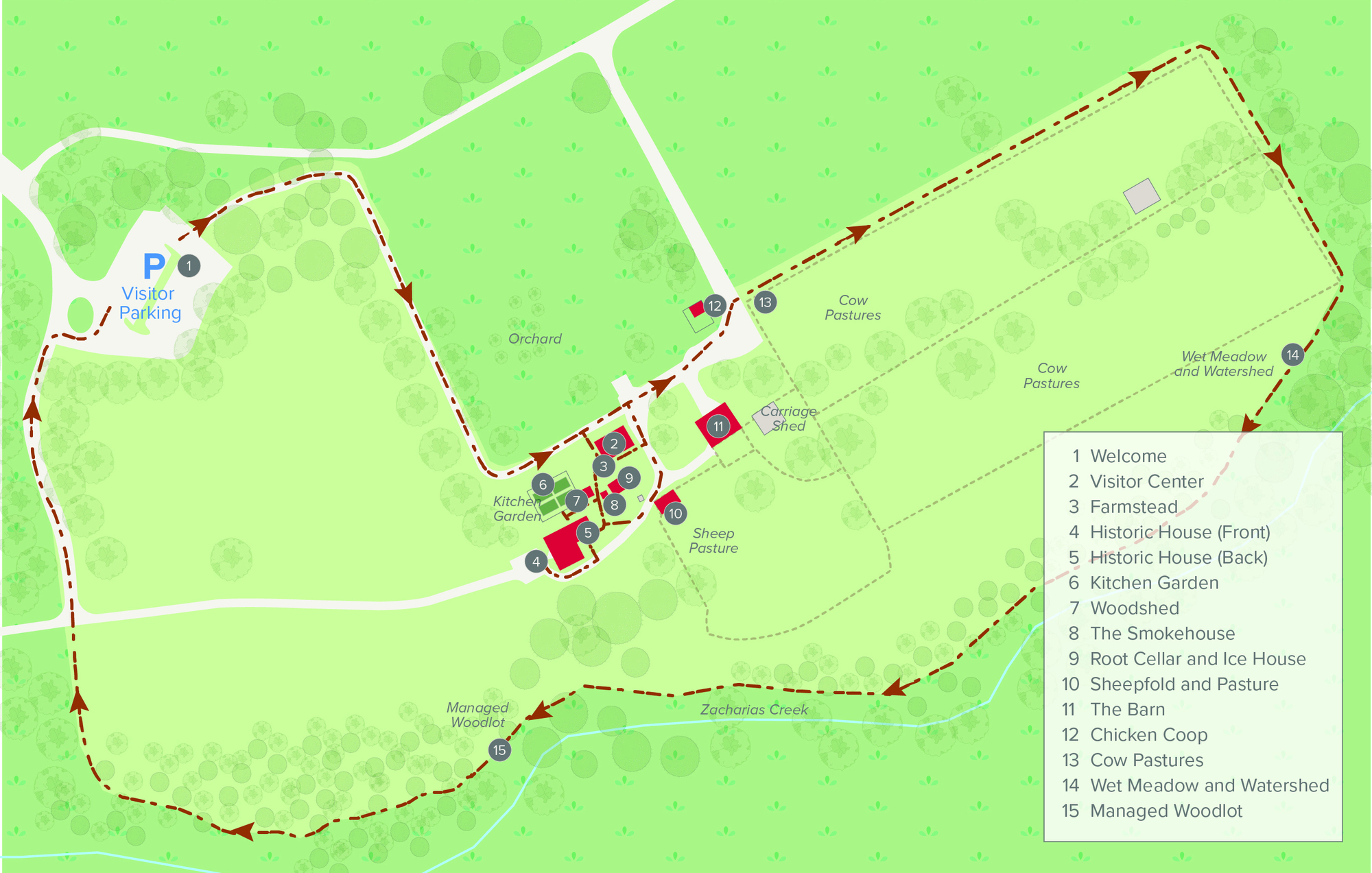
Chicken Coop
Chickens were another important product on an eighteenth-century farm. They were self-sufficient and needed very little care from farmers. They were also a great source of food. On average, chickens can lay an egg a day for nine months out of the year, providing quite a lot of food for families. Chickens were only butchered for meat once they could no longer provide those eggs.
We have a few varieties of chickens, including some that have been cross-bred, and one rooster to provide eggs. Our chickens are fenced in, which would not have been the case in the 1700s, when chickens were free-range, allowed to roam the property.
Your next stop – the cow pasture – is to your right.
LandMark: Lakewood
-
Tobias Fike, "Make Broken," burned and dead tree limbs, wood, found objects, plaster, plastic bags, zip ties, rope, and metal hardware
-
Scottie Burgess, "Sky Vessel," cast iron, upcycled dead tree, and paint
-
Anna Kaye, "Preserve," tree stumps, miniature scenery, and resin birds
-
Kalliopi Monoyios, "Knot," single-use plastic packaging, HDPE house wrap, polypropylene landscaping fabric, and polyester thread
-
Eileen Roscina, "Shelter," willow
-
Nicole Anona Banowetz, "Respire," fabric
-
Jaime Molina, "Sunlaps," mixed media
-
Tiffany Matheson, "Caught," reclaimed ghost net, plastic bottles, wire, and paint
-
Mia Mulvey, "Albedo," ceramic, wood, pigment
-
Jason Mehl, "Spoor of the Anthropocene," CNC Plywood