


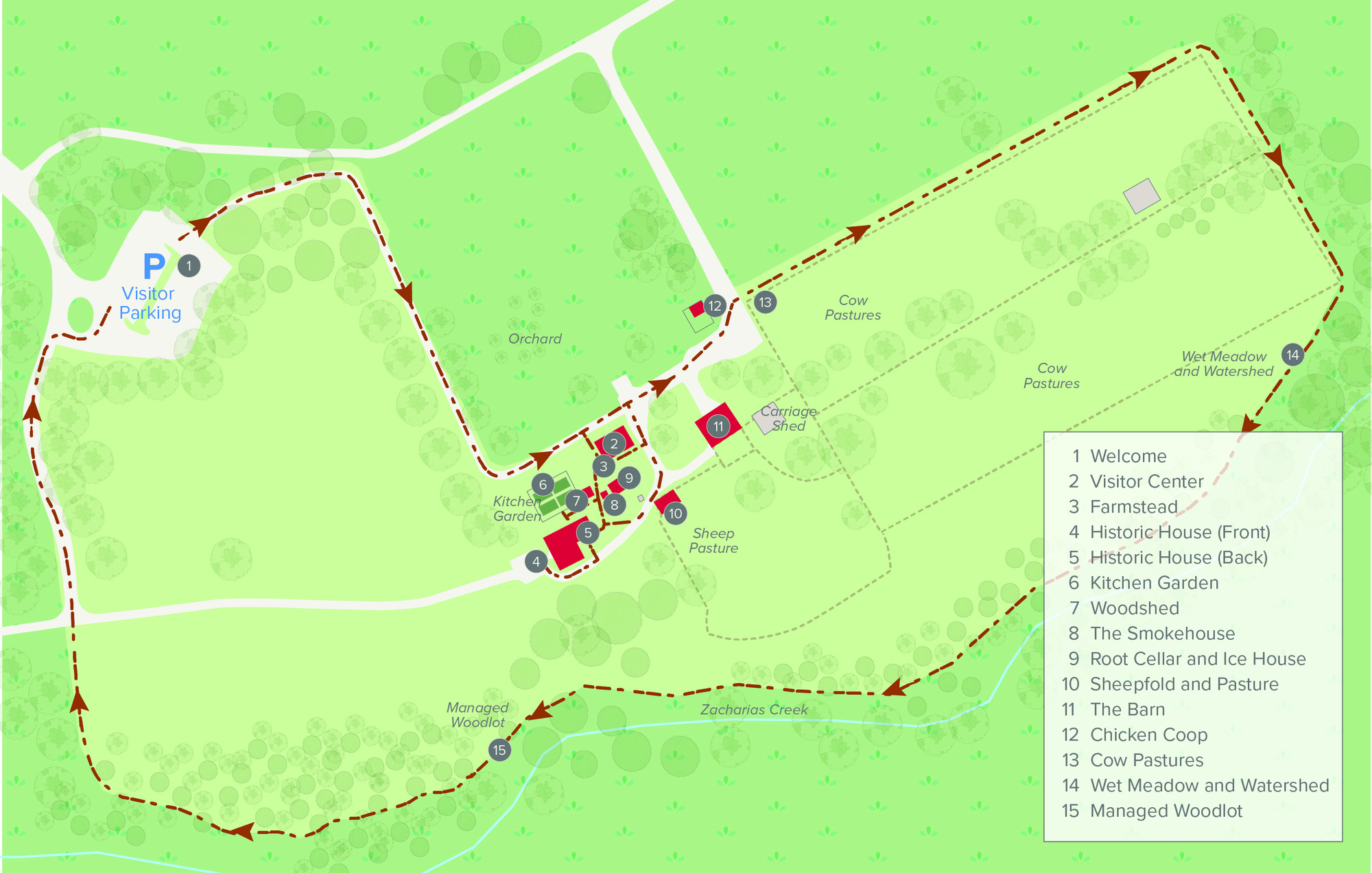
The Smokehouse
While most cooking was done in an open hearth fireplace, eighteenth-century Americans cooked much of their meat in a smoke house. A smoke house was necessary to preserve meats after butchering. Colonial Americans did not have refrigeration, like we do today, so they had to use other methods to keep their food stuffs preserved.
November was a busy month on a colonial farm. Animals like cows, sheep, and chickens were butchered. The meats were prepared and brined with salt and then hung over a smoking fire for a length of time. The charred, outer layer could be removed later, revealing still-fresh meat. Meats smoked in November were consumed throughout the following winter.
While this smokehouse is a reproduction, it is built over an early foundation.
The next stop – the root cellar and ice house – is just to your right.
-
Tobias Fike, "Make Broken," burned and dead tree limbs, wood, found objects, plaster, plastic bags, zip ties, rope, and metal hardware
-
Scottie Burgess, "Sky Vessel," cast iron, upcycled dead tree, and paint
-
Anna Kaye, "Preserve," tree stumps, miniature scenery, and resin birds
-
Kalliopi Monoyios, "Knot," single-use plastic packaging, HDPE house wrap, polypropylene landscaping fabric, and polyester thread
-
Eileen Roscina, "Shelter," willow
-
Nicole Anona Banowetz, "Respire," fabric
-
Jaime Molina, "Sunlaps," mixed media
-
Tiffany Matheson, "Caught," reclaimed ghost net, plastic bottles, wire, and paint
-
Mia Mulvey, "Albedo," ceramic, wood, pigment
-
Jason Mehl, "Spoor of the Anthropocene," CNC Plywood