Stop 9 Cromarty House, St Regulus’ Graveyard – and maybe a castle.
When you reach a large building called The Old Brewery go left along Miller Road. There is a high wall on the right which surrounds the kitchen garden for Cromarty House. These gardens were very important for the big country houses around Scotland, ensuring a good supply of fresh vegetable for the great and the good when they were in residence.
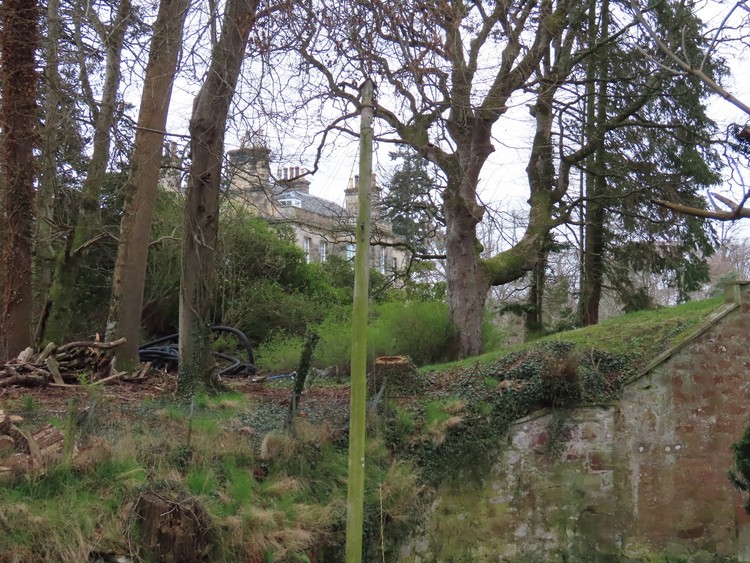
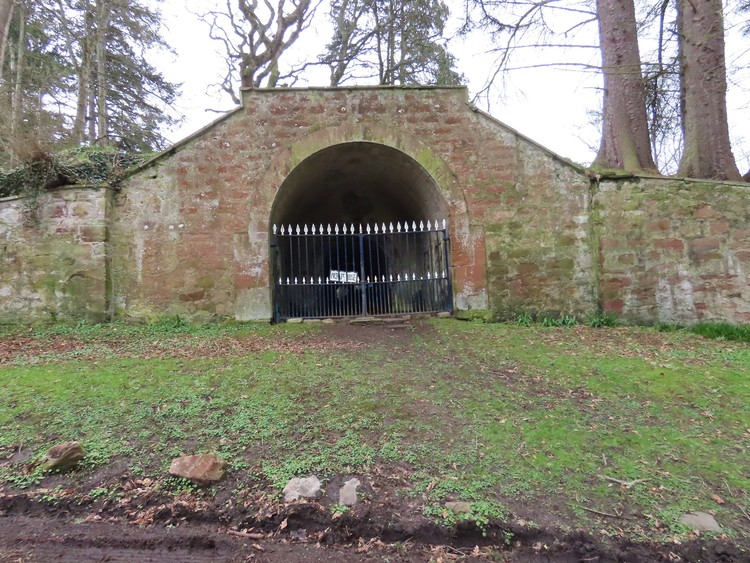
Take the road to the right called Causeway and go up a steep, but short hill, past the bowling green. You will catch glimpses of Cromarty House as you go but the owners of the house over the centuries have used planting and the landscape itself to ensure their privacy was maintained. At one point you will see the entrance to a tunnel which leads from the wall into the house itself. This was the servants’ entrance and used to ensure the owners of the house were not disturbed by the comings and goings of their workers.
There are records of a house at this site going back to 1632 when it was owned by Sir Thomas Urquhart. In the 1680s the Chief of the MacLeod clan bought it, but its ownership was transferred back to the Urquharts in the early 1700s. They were responsible for much of the extensive planting around the site. Like so many grand buildings, it has been remodelled and extended on many occasions over the years. In 1768 it was sold to George Ross, who we have already met as the person who built the factory and the harbour. We will be hearing yet more about him later.
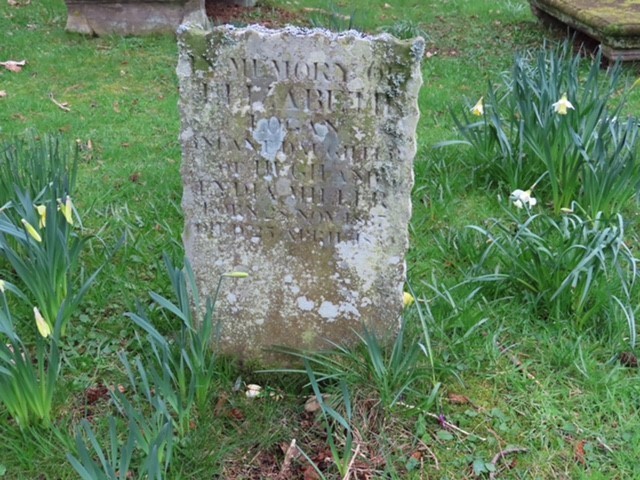
On your left you will see a graveyard through a small gate. Take your time to look around, it is one of the most atmospheric cemeteries I have visited. Look out in particular for gravestones with a distinctive scalloped edge. This was a trademark of Hugh Miller when he was working as a stonemason. In the centre of the graveyard you will see a modest gravestone with that design which was the memorial Miller carved for his own daughter who died as a child. It is reputed to be the last gravestone he ever carved.
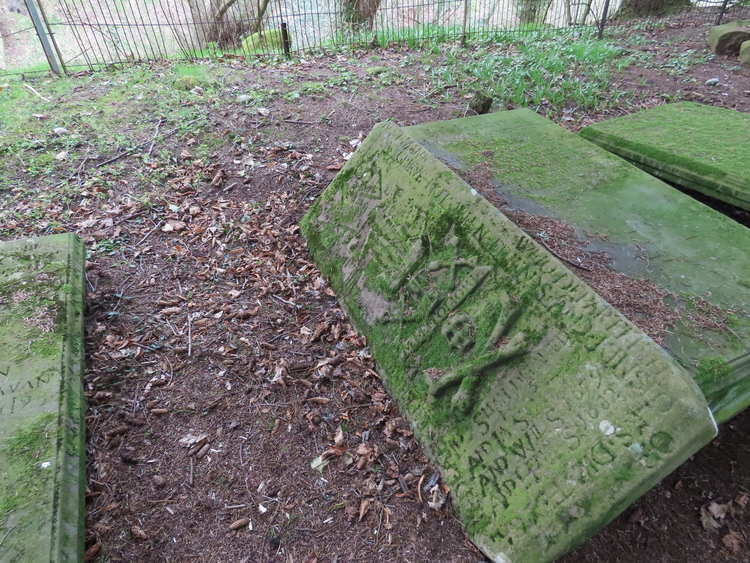
There is another curious stone lying flat on the ground just outside the fence, on the Cromarty House side. This is the burial place of a local man who had been involved in a bitter dispute with a neighbour. It was once believed that, come the resurrection, the souls from Cromarty would assemble at the neighbouring village of Navity, from where they would ascend to heaven. This gentleman insisted on being buried outwith the graveyard so he would be closer to Navity. He thought that way he would get a head start and be able to tell Saint Peter his side of the story before his adversary got there.
You will recall I mentioned Cromarty was protected by a castle, now long gone. One theory is that it was sited where the graveyard is. This makes sense, given its great vantage point, looking over the town.
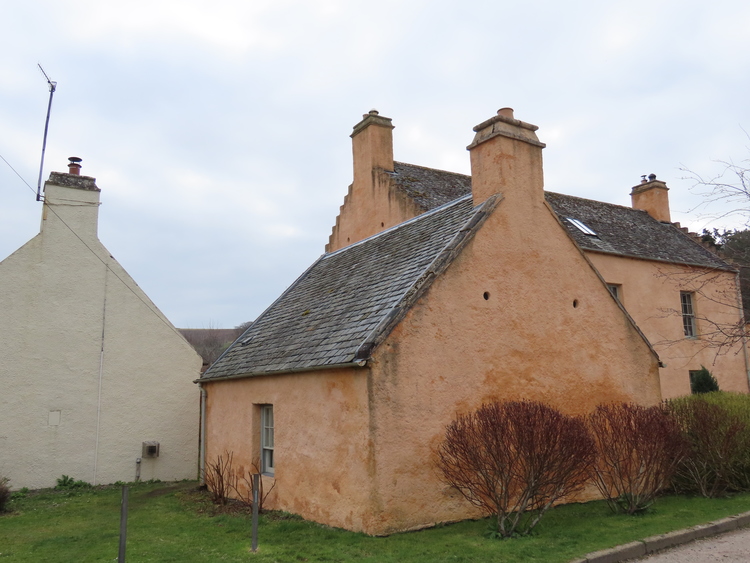
Retrace your steps back down Causeway. The old buildings painted in a terracotta/burnt orange colour have an interesting feature. High on the gable you will see two round holes that would have led into the roof space. They may well have been used to allow pigeons to roost. As one of the few birds to have successive broods of chicks throughout the year, pigeons were valued as a good source of eggs and meat. Continue along Miller Road.
When you reach the Old Brewery building, take a left and press stop 10.