Stop 10 Cromarty’s Heyday.
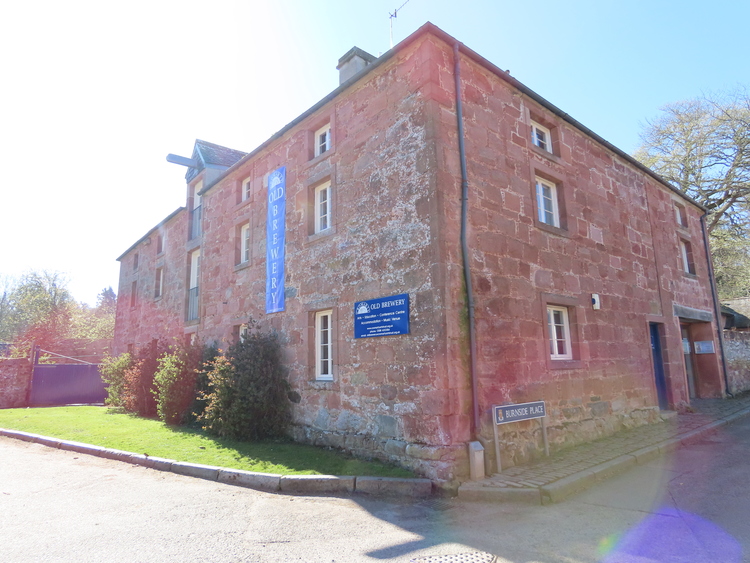
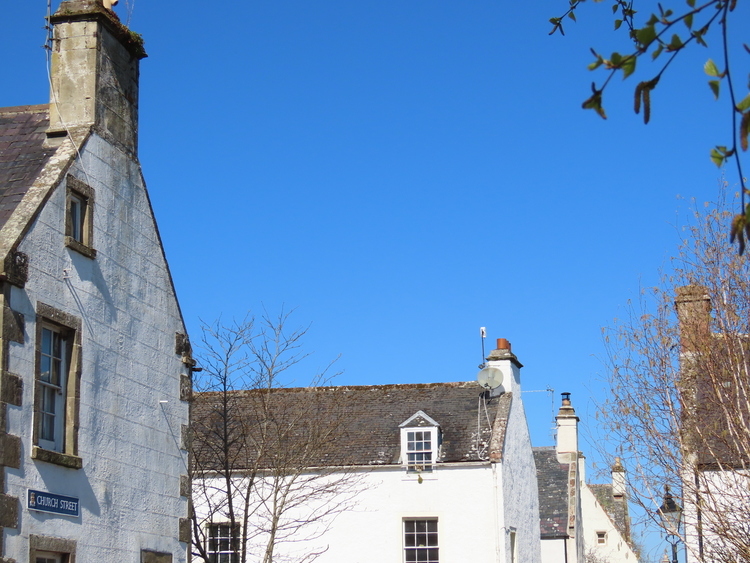
Walk up Burnside Place noting the Old Brewery and turn right into Church Street. Pause to take in the very different look and feel to the place compared to the old fishing town. You can see more prosperous looking buildings laid out in a much more planned manner than we saw in the more haphazard medieval part of the town.
This is the part of Cromarty most associated with its prime years during the Georgian period. As we have already seen George Ross had an amazing impact on the town. He made his money as an Army agent and solicitor in both London and Scotland. He was of the view that, with the right investment, Cromarty had the potential to overtake Inverness as the principal town in the Highlands and he was determined to play his part in making that happen.
As well as the factory and harbour which we saw earlier, he also funded the building of the Brewery, Court House and the Gaelic Chapel. You may think this quite a curious mixture, but they are very closely linked. In the 1700s Cromarty was unusual in that the town itself was dominated by English speakers. Because of its success as a port it was relatively cosmopolitan, constantly welcoming people from all corners of the world and many townspeople were trading far and wide. Just a mile or so out of town however, the majority of the population were Gaelic speakers, making a living from the land. Few would ever have travelled more than a day’s walk from their birthplace. As more and more of the jobs were centred on the town rather than on agriculture, an increasing number of people from the country were spending more time in town. And they were needed to help support its growing prosperity. They were delivering the woven hemp to the factory, working on the fishing boats and in shipbuilding, helping to cure the fish and salt pork for exporting. For Cromarty to become as prosperous as possible it was important this workforce was well looked after and healthy. One thing you did not want was them drinking their home distilled whisky so by building a brewery you gave them access to good healthy beer. You also needed to look after their spiritual health so a chapel where sermons were delivered in their native language was essential. And, if anyone caused any problems you would need to be able to dispense justice without the need for long journeys to Inverness or Dornoch so the Court House too, was very important. With all of these things in place Cromarty did have a successful period and grew to a population of around 2500 in the early 1800s.
But a rapid decline set in and Cromarty has never again seen a population close to that. At the last census there were only 700 residents. What is remarkable is that so much has survived of the different phases of the town’s development.
Walking along Church Street you will reach the East Church on the left. Press Stop 11.