Stop 5 Rosemarkie Mileometer will be just before 18 miles
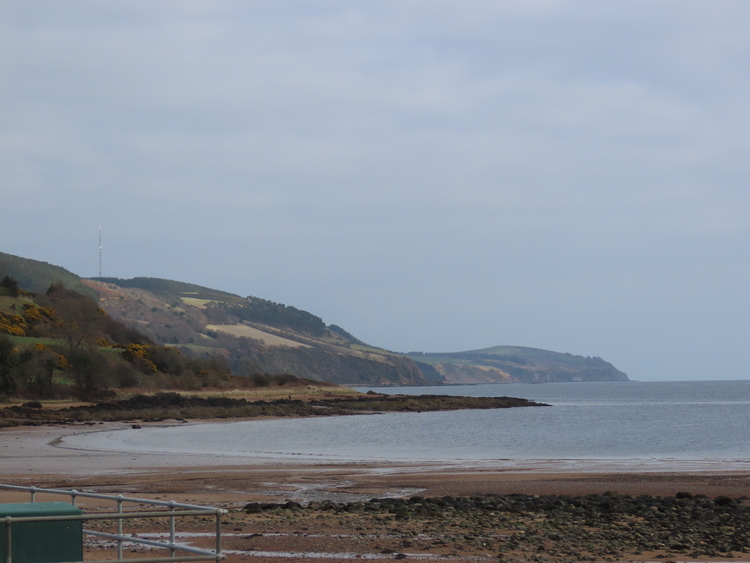
Rosemarkie is another lovely little town. The beach is a fascinating mix of sand and rocks which makes it an ideal place for families. It brings back childhood memories of seaside holidays spent clambering over boulders, paddling, exploring rock pools and skimming stones. You’ll often see beautiful sandcastles decorated with shells and seaweed – some things don’t change.
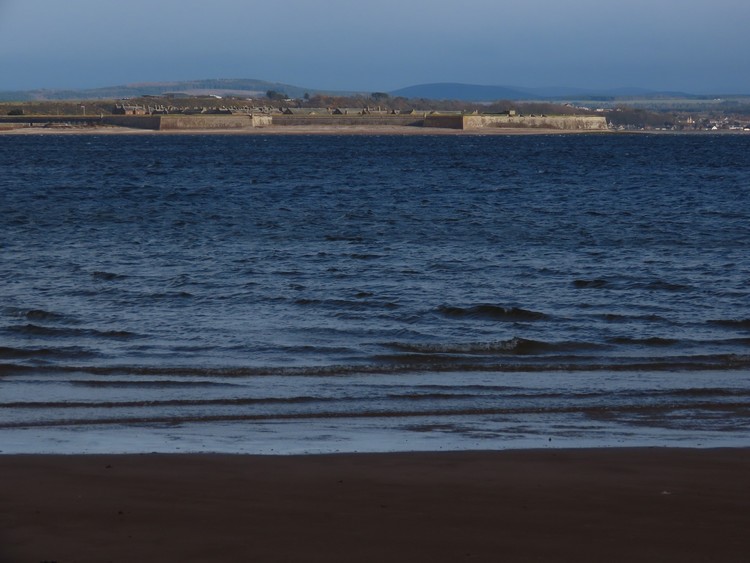
If the weather is good I recommend you take a walk along the beach away from town, to the left. Unless it is high tide you can walk for a good mile or so and enjoy brilliant, everchanging views across the firth. Walk far enough and you’ll find some caves to explore. Across on the opposite shore of the Moray Firth you will see the imposing structure of Fort George. This fort was constructed in the years after the 1745 Jacobite Rebellion. The British Government was so worried about the risk of another rebellion it pursued a number of policies to try to ensure the highlands were not a seat of sedition in the future. Principally this involved garrisoning a huge number of soldiers across the country in three enormous forts, Fort George at Ardersier that you can see, Fort Augustus at the south end of Loch Ness and in Fort William on the West Coast. Only Fort George still stands and is still a working army base today. You can occasionally hear firing from across the water.
As well as this show of military strength and a ruthless policy of putting down any sign of clan rebellion the British Government also encouraged economic development in the Highlands by constructing roads and harbours. It was in pursuit of these more progressive policies that Thomas Telford was commissioned to build the harbour at Avoch, as well as miles of roads, many bridges and the Caledonian Canal.
The beach on which you walk was also the place Hugh Miller, one of Scotland’s greatest men of science, learned about geology. Born in 1802 in Cromarty he trained as a stonemason and was always curious about the fossils he found in the sandstone he worked with. He tried to understand the patterns he saw in the rocks and think about how they were formed. He read widely and became an acknowledged expert on a wide range of scientific studies. His greatest contribution was his ability to describe what he, and other scientists discovered, in a way that was easy to read, making science accessible to ordinary people. He was the David Attenborough of his day. We will hear more about Miller when we visit Cromarty.
If the weather is not so good you may want to enjoy a more sheltered walk. If you’re on the seafront, facing the sea, you will see a bridge crossing a small stream on your left hand side which leads to the Beach café and the basketball/tennis courts. Cross the bridge and go to the left, up the side of the playing field. You can follow the stream on a beautiful path through wonderful woodland, a walk known as the Fairy Glen. After about a mile you will come to some wonderful waterfalls.
Please take time to explore a little but you may well want to come back another day and experience this fabulous place at a more leisurely pace.
After your walk, return to your car. Follow the road along the beach and take a right at the Crofters Café. Head up Hawkhill Road to the main road where you turn right again and head towards Cromarty. At about 26 miles you should be entering the town. Follow the signs for the harbour and the Cromarty Nigg ferry to your left and park close to the harbour near the Royal Hotel, overlooking the sea. There are public toilets nearby. Play stop 6