


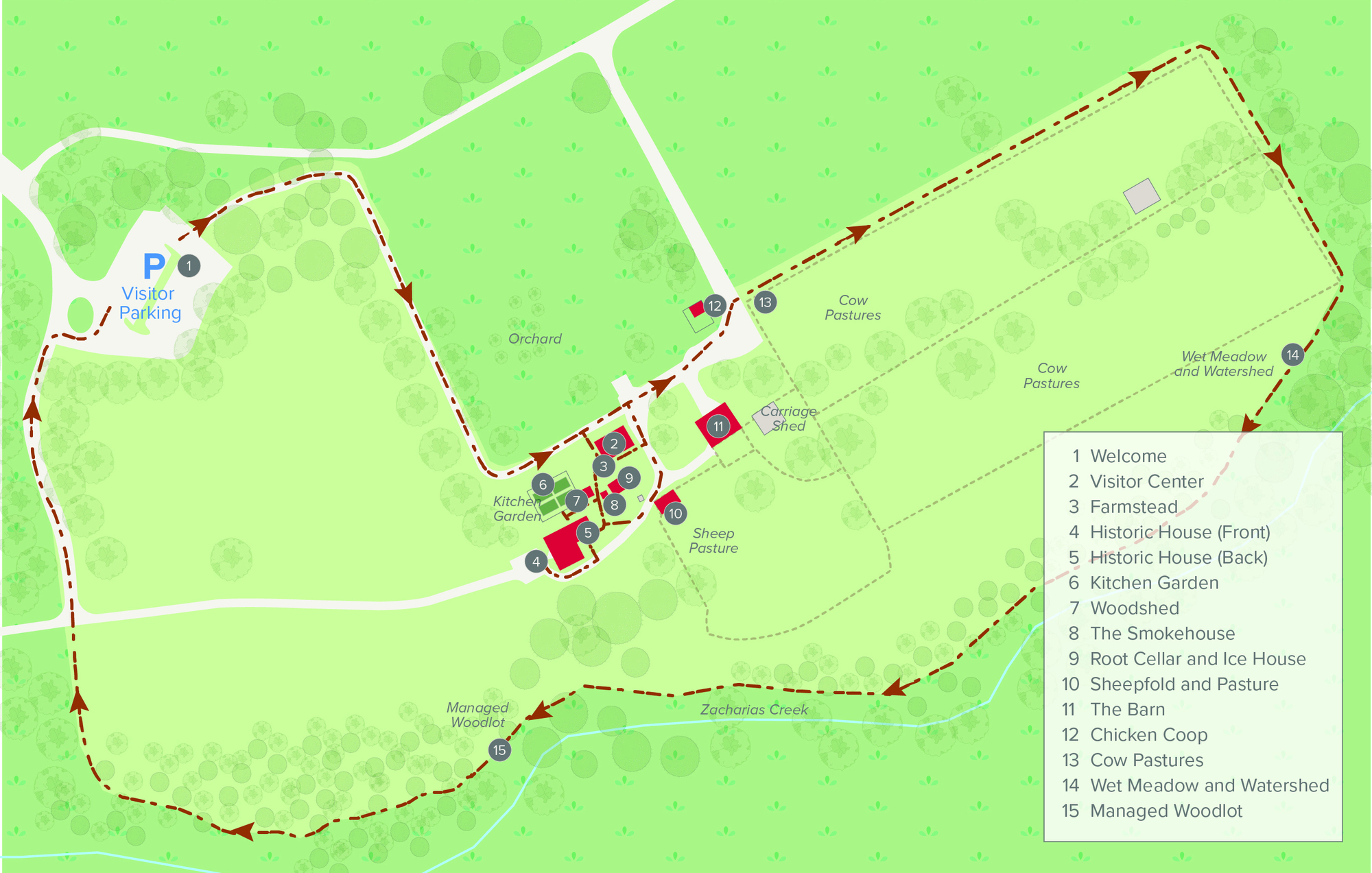
Chicken Coop
Chickens were another important product on an eighteenth-century farm. They were self-sufficient and needed very little care from farmers. They were also a great source of food. On average, chickens can lay an egg a day for nine months out of the year, providing quite a lot of food for families. Chickens were only butchered for meat once they could no longer provide those eggs.
We have a few varieties of chickens, including some that have been cross-bred, and one rooster to provide eggs. Our chickens are fenced in, which would not have been the case in the 1700s, when chickens were free-range, allowed to roam the property.
Your next stop – the cow pasture – is to your right.
Headwear: Protection
-
Igbo Gourd Helmet
-
Lotuko Helmet (Natumu)
-
Brokpa Yak Fur Hat (Tsipee Cham or Shamo)
-
Yi Girl’s Phoenix Crown
-
Han Child’s Hat (Tiger Cap)
-
Bamboo hat
-
Rabari Head Ring (Indhoni)
-
Child’s Hood (Natiyo)
-
Calabash Helmet (Tabungaw)
-
Kuchi Beaded Skullcap
-
Shepherd’s Hood
-
Koryak Hat (Penkin)
-
Sheepskin Hat (Telpek)
-
Sámi Four Winds Hat (Ciehgahpir)
-
Sámi Hood (Nissongahpir)
-
Quechuan Wool Hat (Chullo)
-
Calabash Helmet (Kattokong Nga Tabungaw)