


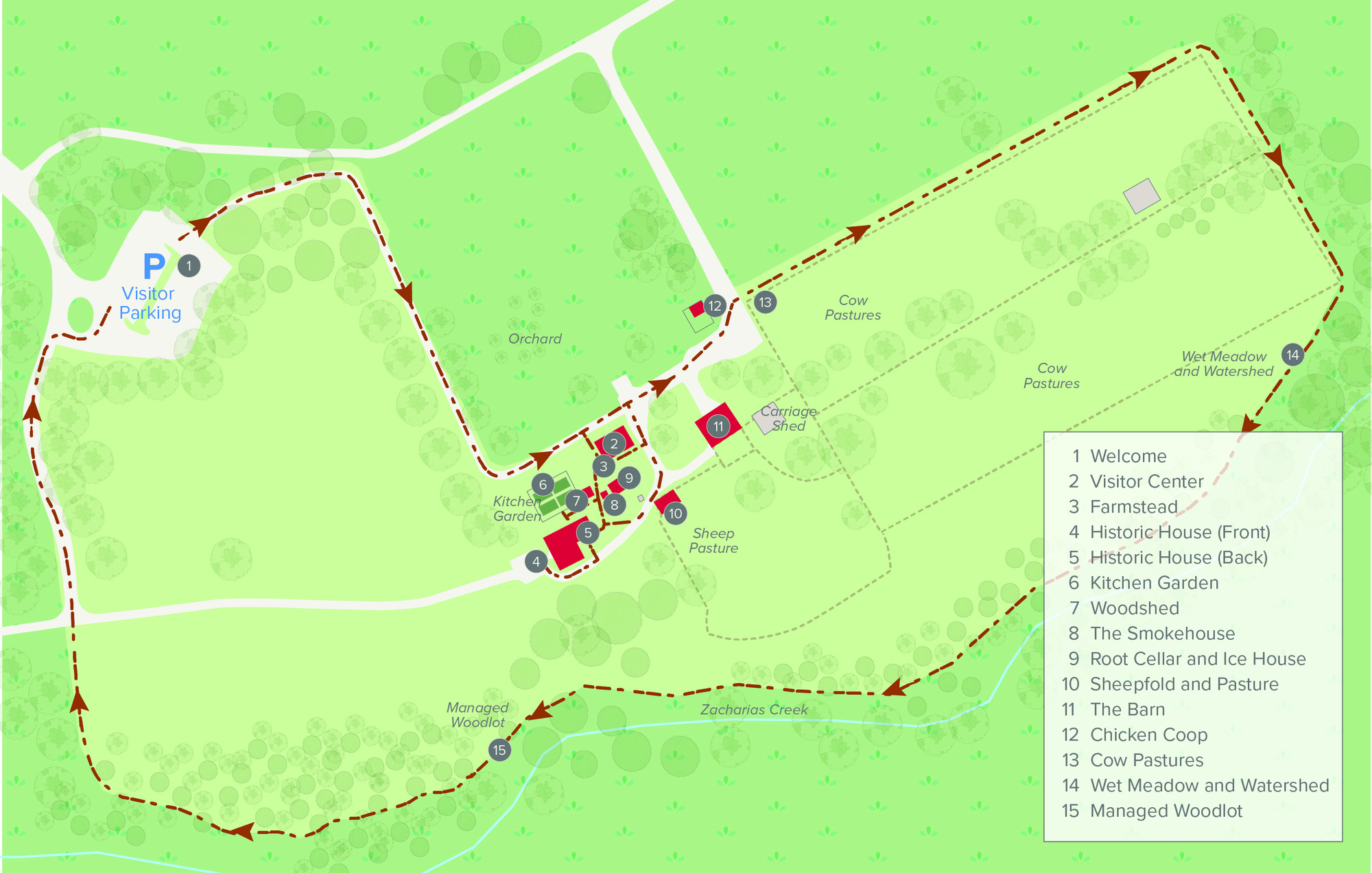
The Smokehouse
While most cooking was done in an open hearth fireplace, eighteenth-century Americans cooked much of their meat in a smoke house. A smoke house was necessary to preserve meats after butchering. Colonial Americans did not have refrigeration, like we do today, so they had to use other methods to keep their food stuffs preserved.
November was a busy month on a colonial farm. Animals like cows, sheep, and chickens were butchered. The meats were prepared and brined with salt and then hung over a smoking fire for a length of time. The charred, outer layer could be removed later, revealing still-fresh meat. Meats smoked in November were consumed throughout the following winter.
While this smokehouse is a reproduction, it is built over an early foundation.
The next stop – the root cellar and ice house – is just to your right.
-
Igbo Gourd Helmet
-
Lotuko Helmet (Natumu)
-
Brokpa Yak Fur Hat (Tsipee Cham or Shamo)
-
Yi Girl’s Phoenix Crown
-
Han Child’s Hat (Tiger Cap)
-
Bamboo hat
-
Rabari Head Ring (Indhoni)
-
Child’s Hood (Natiyo)
-
Calabash Helmet (Tabungaw)
-
Kuchi Beaded Skullcap
-
Shepherd’s Hood
-
Koryak Hat (Penkin)
-
Sheepskin Hat (Telpek)
-
Sámi Four Winds Hat (Ciehgahpir)
-
Sámi Hood (Nissongahpir)
-
Quechuan Wool Hat (Chullo)
-
Calabash Helmet (Kattokong Nga Tabungaw)