Success - Tour Downloaded!
To add a shortcut on your homescreen:
1. Click the share button in Safari

2. Find and Click the add to homesceen button

The download option is for mobile devices

Visit this page on your Android or Apple devices to download.
Link: https://youraudiotour.com/tours/warhol-15-prints
Success - Tour Downloaded!
To add a shortcut on your homescreen:
1. Click the menu button in Chrome
2. Find and Click the add to homesceen button

Tour download has started

Working... this may take a few minutes.
%
TIP: If you have trouble accessing the tour offline try clearing your cache and downloading again.
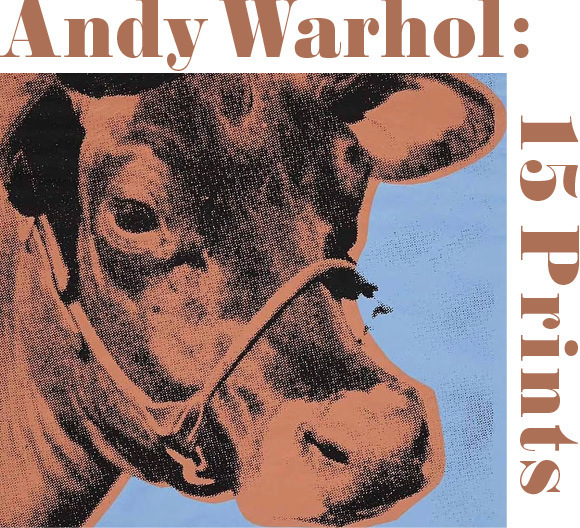
Warhol: 15 Prints
One of the most recognizable figures in 20th-century art, Andy Warhol (American,1928–1987) elevated the visual language of contemporary life into iconic works of art that shape how we think about images, fame, and consumer culture. The University of Wyoming Art Museum is fortunate to hold a sizable collection of his work through the generosity of the Andy Warhol Foundation for the Visual Arts, which distributed more than 52,000 Warhol photographs and prints to educational institutions. This exhibition fulfills the museum’s commitment to the Foundation to exhibit a significant portion of the donated works each decade, while providing the opportunity to view the work anew in context with artworks on loan from neighboring institutions across the Front Range: Colorado State University’s Gregory Allicar Museum of Art and the University of Colorado Boulder’s Art Museum. The fifteen prints on display celebrate the breadth of Warhol’s subject matter from celebrities to the mundane and include selections from his Cowboys and Indians series.
Warhol was born Andrew Warhola to working-class immigrant parents in Pittsburgh, Pennsylvania, where he later attended the Carnegie Institute of Technology. After moving to New York City in 1949, he first found success as a store-window display designer and as an illustrator for advertisements and magazines, experiences that informed his later artistic style. Warhol’s name has become synonymous with Pop Art, an art movement that developed in the 1960s and is characterized by images taken from mass media and popular culture, reflecting the rapid expansion of television, advertising, and image-based consumption in post-WWII America.
Warhol’s studio—aptly named The Factory—functioned as both a workshop and a social hub, where assistants, friends, and collaborators helped produce his silkscreen prints and other works. The democratic nature of printmaking appealed to Warhol’s interest in accessibility and multiplicity, with original artworks produced in editions rather than as unique works (an approach that later allowed for his Foundation’s significant distribution of art). The prints circulated widely, extending his influence beyond the confines of the art world and into popular consciousness. Warhol’s work explored the intersection of art and business, a theme he treated with both irony and sincerity. His oft-quoted remark—“Making money is art, and working is art, and good business is the best art”—underscored his fascination with the commodification of creativity. His later portraits of socialites, entertainers, and world leaders have been alternately dismissed as overly commercial and praised as incisive commentary on fame and power. Appropriating mass-produced imagery, Warhol employed a flattened, impersonal style transforming photographs through broad areas of unmodulated color reflecting back the mass-production systems of the culture he drew from.
As his own fame grew, Warhol became one of the very icons he depicted. A regular at the glamorous star-studded nightclub Studio 54, he also founded Interview magazine, hosted a television show, appeared in music videos and even on The Love Boat, blurring the line between artist and celebrity. His mentorship of and influence on subsequent generations—from Jean-Michel Basquiat and Keith Haring to countless artists today—continues to shape the language of contemporary art. Through the generosity of the Andy Warhol Foundation for the Visual Arts, Warhol’s artistic legacy is not confined to private collections and museums in major cities but is shared with audiences across the country.
Success - Tour Downloaded!
To add a shortcut on your homescreen:
1. Click the share button in Safari
2. Find and Click the add to homesceen button
The download option is for mobile devices
Visit this page on your Android or Apple devices to download.
Link: https://youraudiotour.com/tours/warhol-15-prints
Success - Tour Downloaded!
To add a shortcut on your homescreen:
1. Click the menu button in Chrome
2. Find and Click the add to homesceen button
Tour download has started
Working... this may take a few minutes.
%
TIP: If you have trouble accessing the tour offline try clearing your cache and downloading again.
-
Cow Wallpaper
-
Little Electric Chair
-
Paris Review Poster
-
Flowers (Red/Yellow)
-
Sunset
-
Kimiko
-
Joseph Beuys
-
Ladies and Gentlemen (Marsha P. Johnson)
-
Martha Graham (Satyric Festival Song)
-
Cowboys and Indians (John Wayne)
-
Cowboys and Indians (Annie Oakley)
-
Cowboys and Indians (Sitting Bull)
-
Cowboys and Indians (Mother and Child)