Stop 4: Southern Cotton
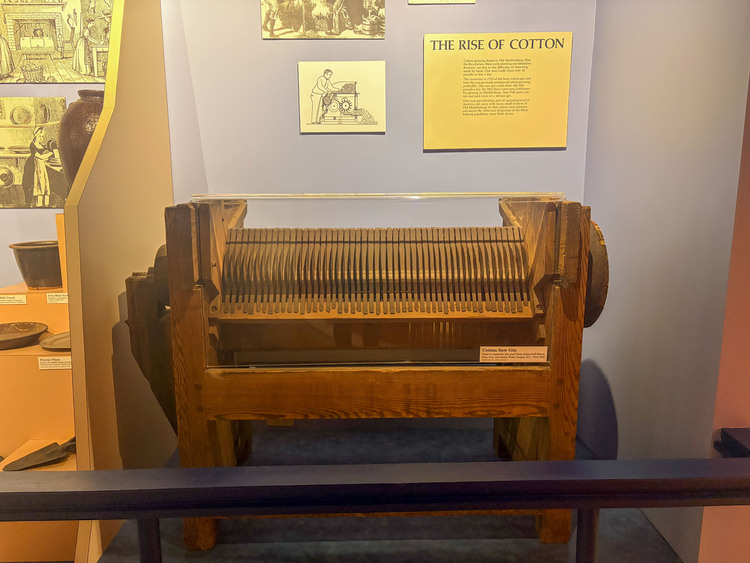
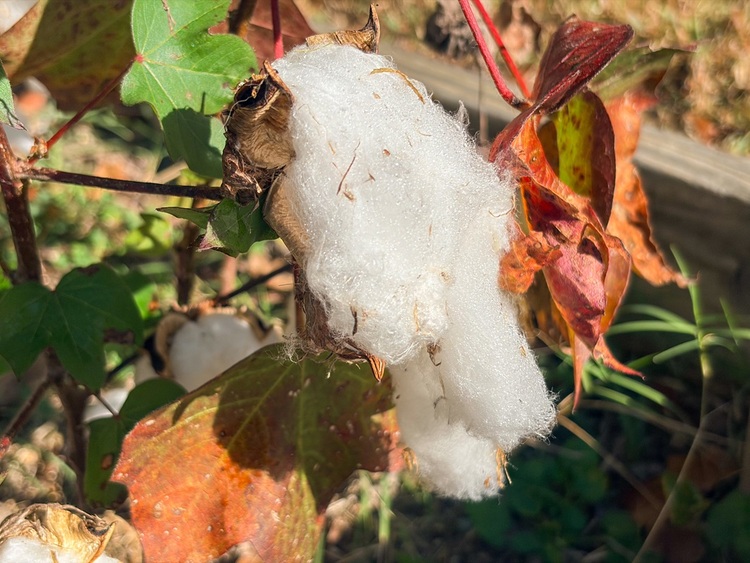
In front of you is a 50-saw cotton gin. Samuel Polk (James K. Polk’s father) owned a 40-saw cotton gin, similar but slightly smaller than this one. Patented in 1794 by Eli Whitney, the cotton gin revolutionized the production of cotton. Rather than separating the soft fibrous boll from the hard seedpod by hand, the cotton gin enabled a much faster separation process and a substantial increase in cotton production. Encouraged by Thomas Jefferson, Mr. Whitney saw great potential in his invention, saying “... if a machine could be invented which would clean the cotton with expedition, it would be a great thing both to the Country and to the inventor.”
Increased cotton production in the early 1830s drove a higher demand for enslaved people to harvest and process the cotton. This pattern of increased enslaved labor repeated itself throughout the South as mechanized cotton production increased. By 1860, the enslaved population in American states and territories had increased by over 500%. While living in North Carolina, Samuel Polk’s farm was smaller in comparison to larger plantations, but his enslaved labor force doubled, going from two people to four around the time when he purchased his 40-saw cotton gin. Samuel enslaved two women, Lucy and Violet, who were separated from their families as young girls and brought to live with Samuel and his new wife, Jane. Samuel purchased the two other people around the same time he purchased his cotton gin. Their names are unknown to us today; however, their labor was essential to the farm’s success. When Violet and Lucy were older, a baby boy, named Elias, was born to either Violet or Lucy shortly before the Polk family and enslaved people moved to Columbia, Tennessee.
The next stop will be in front of the large mural of Boston labeled “The Spirited Age: 1820-1850. Look for the red, square sign labeled #5. Scan the QR code, or press next on your device.
-
Introduction
-
Stop 1: American Indian and Catawba Nation
-
Stop 2: Life on the Polk Farm
-
Stop 3: Childbirth
-
Stop 4: Southern Cotton
-
Stop 5: The Spirited Age: 1820-1850
-
Stop 6: The Whig Party and the Election of 1844
-
Stop 7: James K. Polk’s Presidency
-
Stop 8: War with Mexico
-
Stop 9: Santa Anna versus the new state of Texas