Stop 3: Childbirth
In the United States, infant mortality rates were high during the 1800s. Close to 50% of all children did not live past their fifth birthday. Childhood illnesses such as chicken pox, measles, polio, and smallpox were frequent threats to a child’s health. Complications related to childbirth and postpartum infections were a significant cause of death for mothers. 8 Women across society generally experienced pregnancy over ten times during their childbearing years. For enslaved women, the natural risks of pregnancy and child-bearing were compounded by the violence of a life in bondage. It was not until the mid-20th century, with the introduction of antibiotics, that maternal mortality rates began to decline.
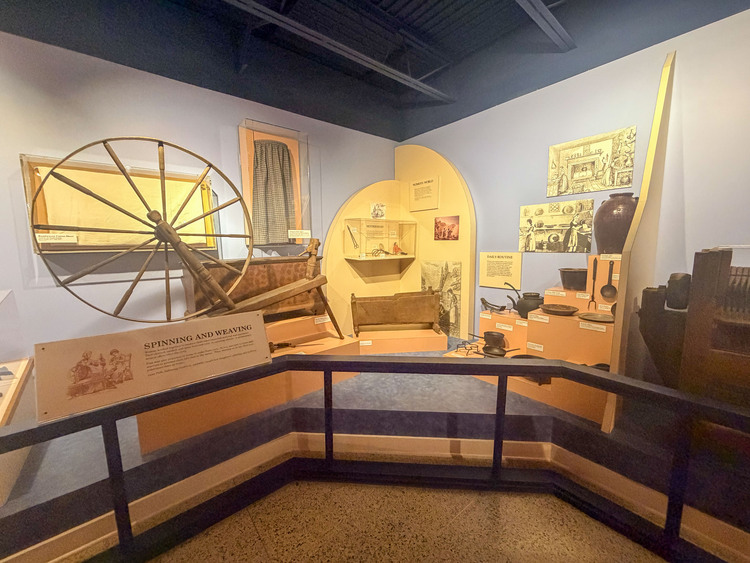
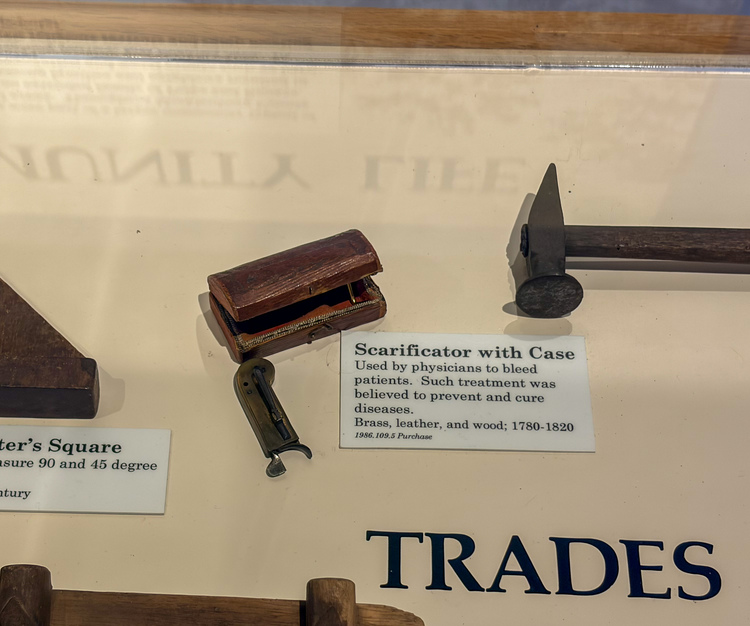
To the left of the spinning wheel in the trades and crafts case is a medical tool called a scarificator (a red marker is next to it). Doctors used scarificators to intentionally bleed a patient. Bloodletting was also a popular remedy to relieve pregnancy complications, such as morning sickness. Other preventative measures for miscarriage included rest, cold air, vinegar applied to the back, as well as wine and opiates.
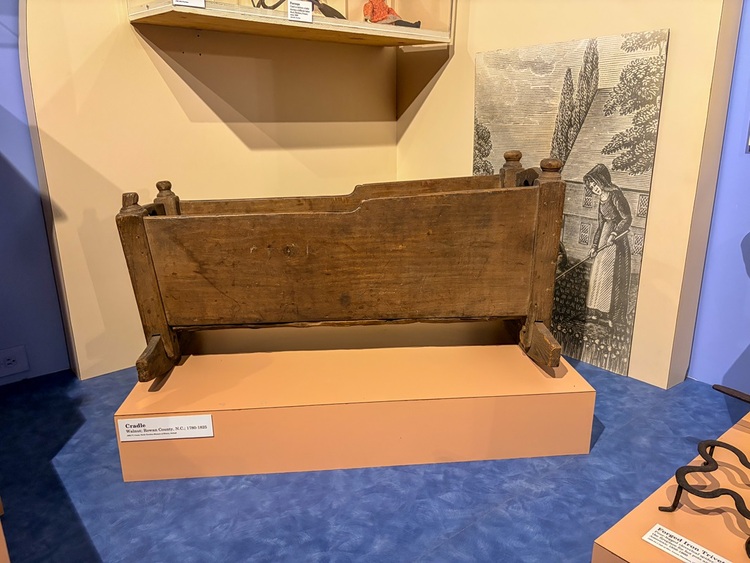
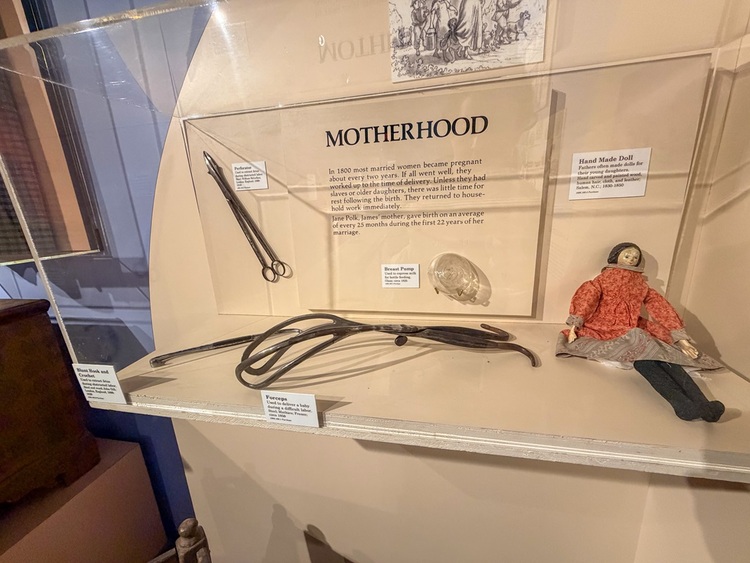
To the right of the spinning wheel and directly above the cradle, there are other medical devices used to aid in the delivery of a child during difficult labor. On the left is a crochet hook, used to break a woman’s water membranes and bring on labor. In the center of the case are forceps that would help deliver the baby. If the baby died in the womb and was too large for the mother to deliver naturally, a physician or midwife could also use the perforator, located on the left-hand side, during difficult labor.
The next stop will be in front of the red, square sign labeled #4, next to the cotton gin. Scan the QR code, or press next on your device.
-
Introduction
-
Stop 1: American Indian and Catawba Nation
-
Stop 2: Life on the Polk Farm
-
Stop 3: Childbirth
-
Stop 4: Southern Cotton
-
Stop 5: The Spirited Age: 1820-1850
-
Stop 6: The Whig Party and the Election of 1844
-
Stop 7: James K. Polk’s Presidency
-
Stop 8: War with Mexico
-
Stop 9: Santa Anna versus the new state of Texas