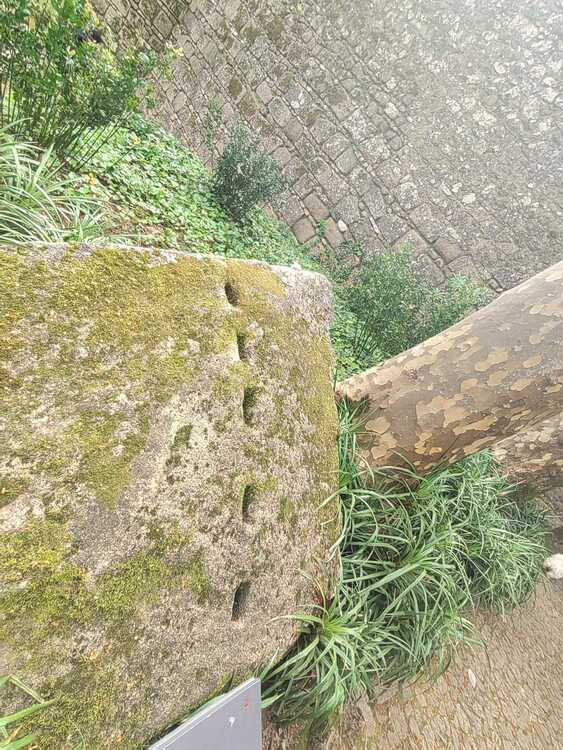
11. Cut Stone
Evidence of block extraction using wooden wedges is visible. To divide granite rocks into blocks, either existing natural fissures in the rock were utilized, or new incisions were made, into which dry wooden wedges were inserted under pressure. Subsequently, the wedges were soaked in water, leading to their expansion and exertion of pressure, resulting in the separation of the rock into blocks along fracture lines.
The technique of using wooden wedges was still common in the 19th and 20th centuries.
El Acuario de Shreveport
-
PEZ BALLESTA Y MÁS
-
PEZ GLOBO Y MÁS
-
PEZ BURRO PAYASO Y MÁS
-
PEZ PAYASO ROSADO Y MÁS
-
PEZ BURRA RAYADO Y MÁS
-
PEZ LEÓN
-
RANAS VENENOSAS
-
BEBÉS CAIMANES
-
MOJARRA OREJA AZUL
-
TORTUGAS CAIMÁN MORDEDORAS
-
SALVINIA
-
TORTUGA MORDEDORA COMÚN ALBINA
-
TORTUGAS DE ESTANQUE
-
PISCINAS COSTERAS
-
PULPO COMÚN
-
PECES LINTERNA
-
ANGUILAS MORENAS + MÁS
-
TÚNEL DE TIBURONES
-
MANTARRAYAS
-
CANGREJOS DE HERRADURA Y MÁS
-
PECES BOCONES Y MÁS
-
MEDUSA LUNA
-
ANTHIAS
-
PEZ CARDENAL PIJAMA
-
CABALLITOS DE MAR Y PEZ PIPA
-
ANGUILA LOBO Y MÁS
-
ORTIGA DE MAR
-
TANQUE DE CORAL VIVO