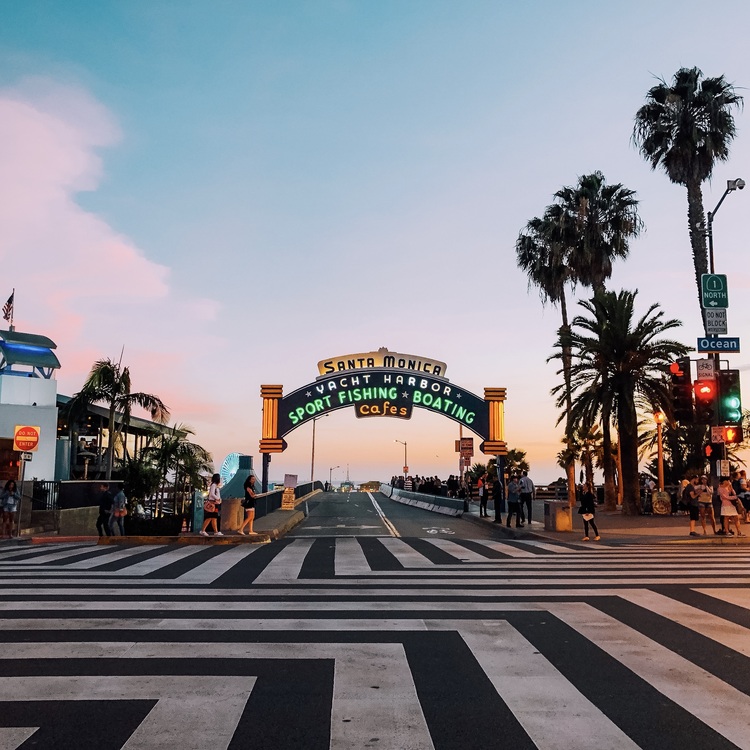
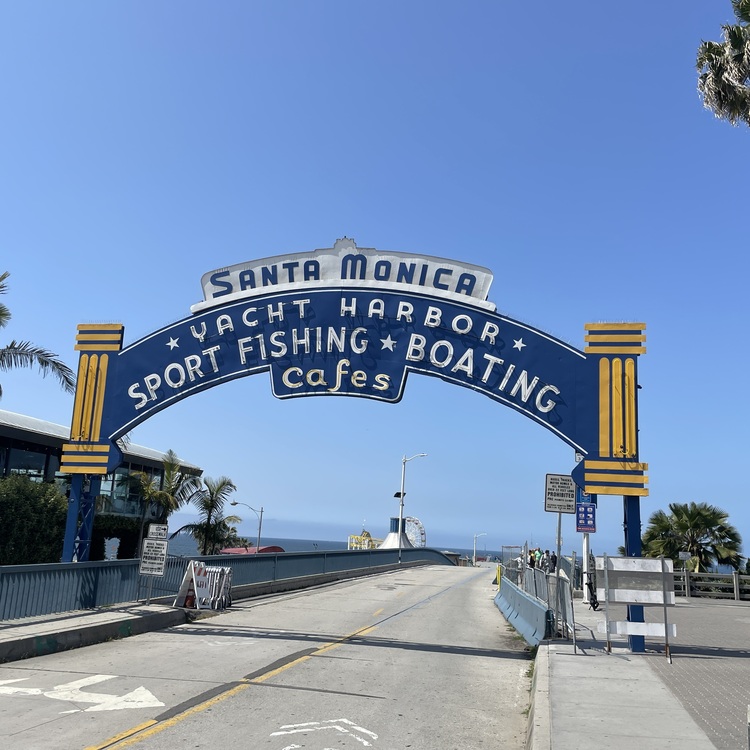
Santa Monica Pier Arch Sign
As we continue south on Ocean Ave. and cross over Colorado Street look to your right and you will see the famous Santa Monica Pier and its iconic Arch Neon Sign.
We will walk onto the Pier later in the tour.
The Santa Monica Pier was built back in 1909, and it quickly became a hub of entertainment and leisure for the growing city. At first, it was just a simple wooden pier with a few basic attractions, but over time, it grew into the sprawling complex you see today. In the early 20th century, it was a popular spot for dancing, music, and other forms of entertainment. In the 1920s and 30s, it was a hotspot for Hollywood celebrities looking to escape the hustle and bustle of Tinseltown.
In 1934 a granite breakwater was constructed and a fishing and yacht Harbor was created. Charlie Chaplin purchased the first mooring and the iconic Santa Monica Yacht Harbor sign, which still stands at the entrance to the Pier, was built.
At the time the Sign was erected, the major attractions on the Pier were the yacht harbor, sport fishing, and boating. Santa Monica wanted the sign to advertise the outstanding amenities and activities located on the Pier, thus the pier sign reads ‘Santa Monica Yacht Harbor – Sport Fishing – Boating – Cafes.
The information on the sign was correct, for a short time. The outbreak of World War II pretty much ended the yacht harbor aspect, but the sport fishing element continued to thrive. The neon was even extinguished during the war. There were issues with the breakwater that had been built in the 1930s that made boating unsafe, and by the early 1980s, the Yatch Harbor was closed.
If we turn 180 degrees and face away from the Pier you see the 6-story acrylic mega mural, approx. 80-foot high by 56-foot wide Mural painted in 2023 by artist Shepard Fairey. There are many murals created by different artists throughout Santa Monica.
This is a quote about the mural from the artist: "Santa Monica is a beautiful place with a vibrant history filled with creators and rebels from surf, skate, and music culture. No neighborhood is one-dimensional, so I chose to emphasize themes and bits of history related to Santa Monica that I most enjoy. I’m drawn to the hippie spirit of the neighborhood, which is welcoming of all types, the natural beauty, ocean air, and the way the Pacific Ocean Park once it was abandoned, provided a fertile wasteland for surfers and skaters to flourish."
-
PEZ BALLESTA Y MÁS
-
PEZ GLOBO Y MÁS
-
PEZ BURRO PAYASO Y MÁS
-
PEZ PAYASO ROSADO Y MÁS
-
PEZ BURRA RAYADO Y MÁS
-
PEZ LEÓN
-
RANAS VENENOSAS
-
BEBÉS CAIMANES
-
MOJARRA OREJA AZUL
-
TORTUGAS CAIMÁN MORDEDORAS
-
SALVINIA
-
TORTUGA MORDEDORA COMÚN ALBINA
-
TORTUGAS DE ESTANQUE
-
PISCINAS COSTERAS
-
PULPO COMÚN
-
PECES LINTERNA
-
ANGUILAS MORENAS + MÁS
-
TÚNEL DE TIBURONES
-
MANTARRAYAS
-
CANGREJOS DE HERRADURA Y MÁS
-
PECES BOCONES Y MÁS
-
MEDUSA LUNA
-
ANTHIAS
-
PEZ CARDENAL PIJAMA
-
CABALLITOS DE MAR Y PEZ PIPA
-
ANGUILA LOBO Y MÁS
-
ORTIGA DE MAR
-
TANQUE DE CORAL VIVO