
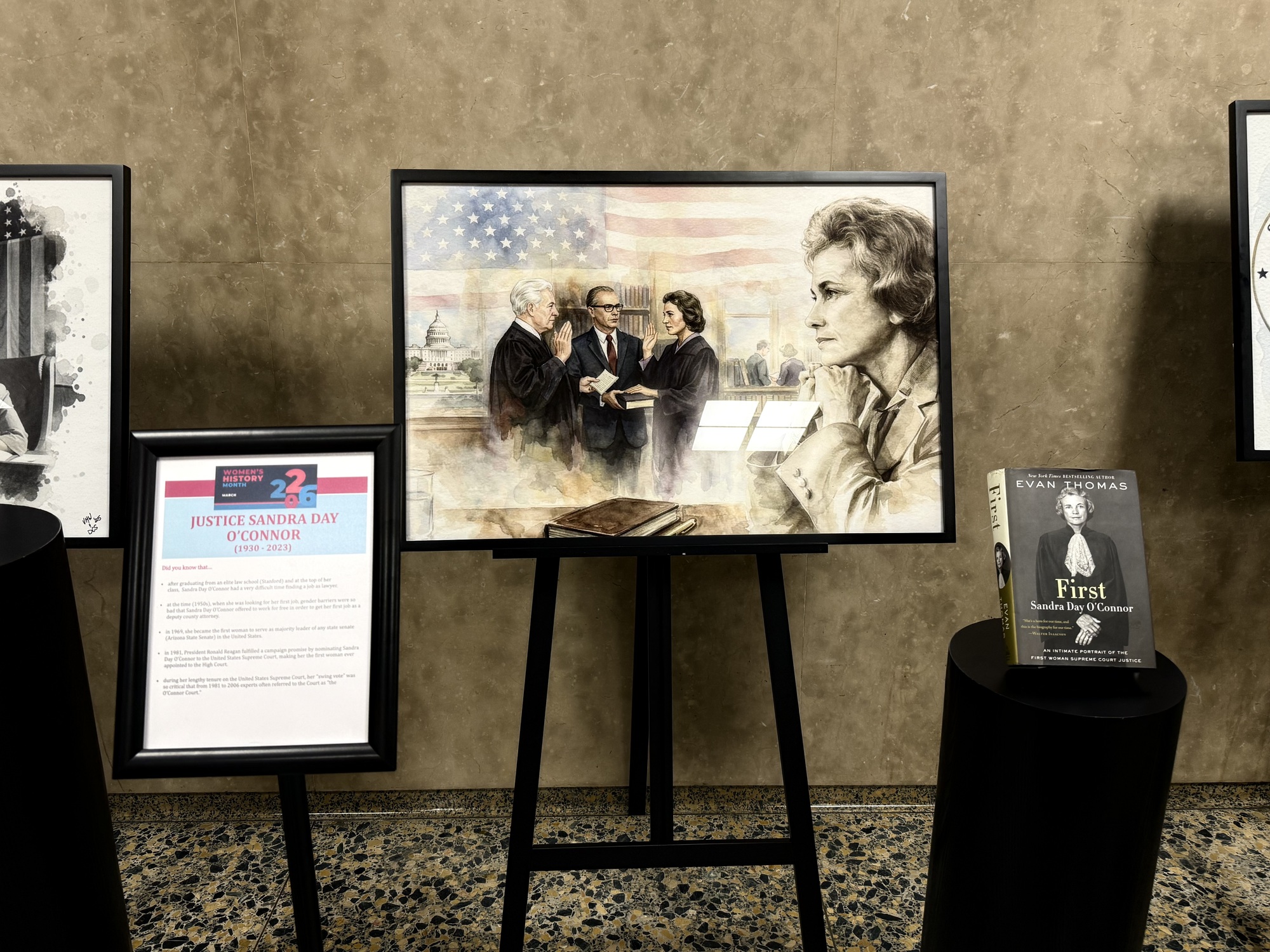
Justice Sandra Day O’Connor: A Judge who had been mending fences all of her life.
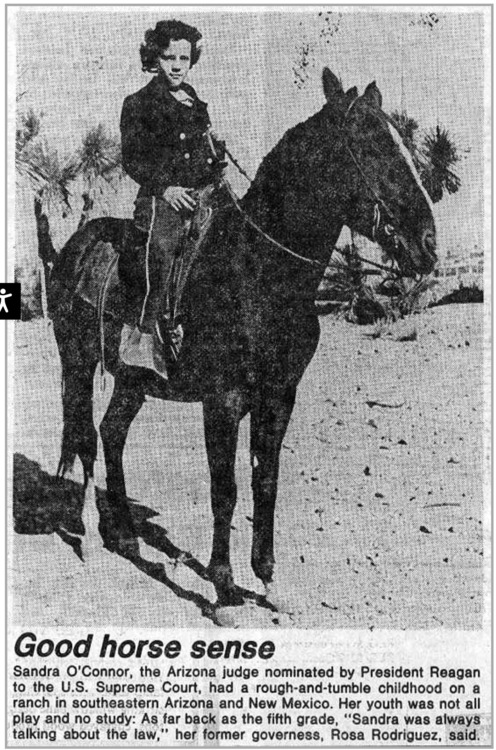
Sandra Day O’Connor was born in El Paso, Texas and raised on a large remote cattle ranch in Arizona called the Lazy B. During her early childhood, Justice O’Connor and her family lived without running water and electricity. However, whatever her family ranch lacked in modern conveniences, it certainly did not seem to inhibit young Sandra Day O’Connor’s academic or personal growth.
Incredibly, she skipped two grades at her local school and was admitted into Stanford University at the young age of sixteen. While at Stanford, almost a foreshadowing of things to come, she was elected senior class President and, after entering Stanford Law School, she earned a spot on the board of editors for the Stanford Law Review.
Despite having graduated third in her law school class, Justice O’Connor got the same response from multiple law firms where she sought a legal position: “We don’t hire women.” However, not to be deterred, Justice O’Connor, instead, chose to work for free as a deputy county attorney at San Matteo County, California.
In the years that followed, her sharp intellect and incredible work ethic could not be denied and so leadership opportunities (which had never been available to women) were now open to Justice O’Connor. For example, in 1972 Justice O’Connor became the first woman in the country to hold the position of majority leader in a state senate.
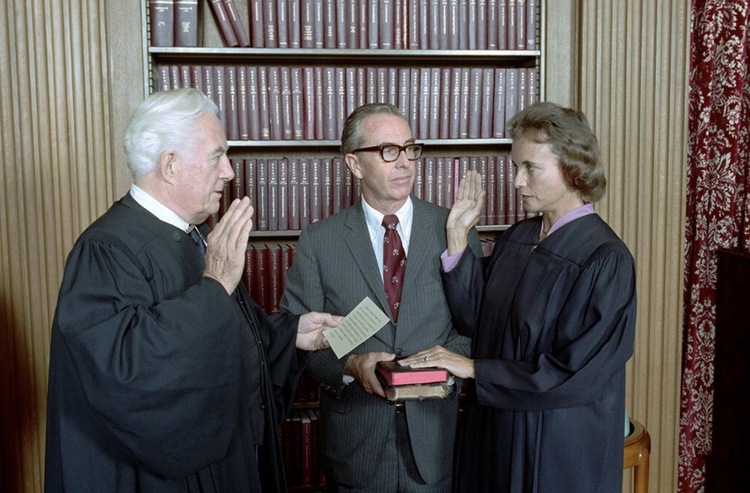
In 1974 she left her position as majority leader of the Arizona State Senate to become a county judge in the Maricopa County Superior Court and later was appointed to the Arizona Court of Appeals. In 1981, Justice O’Connor was nominated by President Ronald Reagan as the first woman to the Supreme Court.
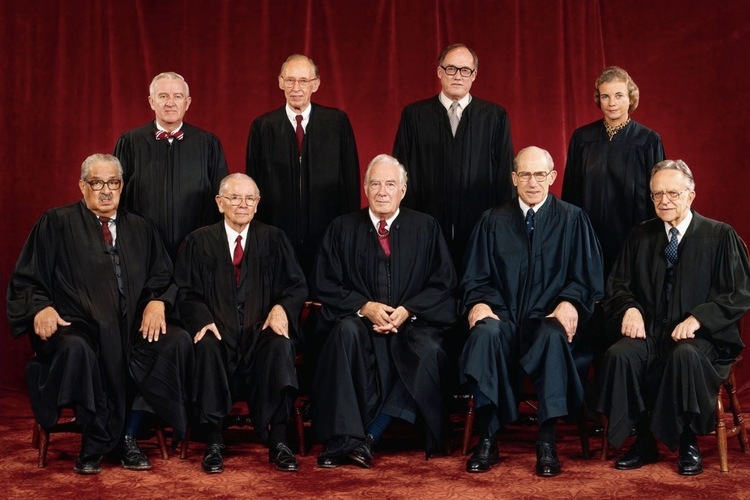
Justice O’Connor spent the next 24 years on the United States Supreme Court. Known for being a centrist and moderating influence on both conservatives and liberal justices, she honed her skills as a “mender of fences” get a divided court to reach consensus. Fellow Justice Clarence Thomas once described her as “the glue of the court” and “the reason this place was civil.”
Similarly, Supreme Court Justice Stephen Bryer also described that “fence mending” side of the Justice O’Connor when he said that she had “a special talent, perhaps a gene… for helping to restore good humor in the presence of strong disagreement; for helping to produce results that are constructive; for helping those at odds today to remember that ‘tomorrow is a new day.’”
With regard to whether it's a new day for women in the legal profession, Justice O'Conner stated that “While women have made tremendous advances in this century, the process of achieving gender equality is still an ongoing one, in this country and throughout the world. In many respects, we have traveled far, although we have a way yet to go.”
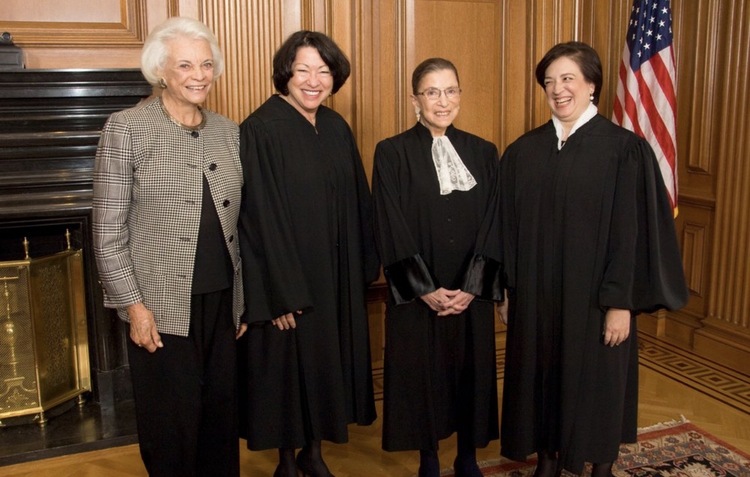
It's hard to argue with the observation that because of Justice O’Connor’s trailblazing career that we have traveled quite a distance since Justice O'Connor graduated from Stanford. Perhaps the best proof of that we have come quite a distance is that, now, nearly half of the Justices on the United States Supreme Court are women.
-
Judge Judith Kaye: A Woman of Many Firsts.
-
Supreme Court Justice Ketanji Brown Jackson: From segregation to the Supreme Court.
-
Justice Sandra Day O’Connor: A Judge who had been mending fences all of her life.
-
Justice Sotomayor: Law, Life, and Lived Experience.
-
Arabella Mansfield: The woman who opened the door to the Bar.
-
Constance Baker Motley: Climbing ladders and breaking glass ceilings.
-
Judge Jane Bolin: Believed that love and the law were allies.