The Orchard
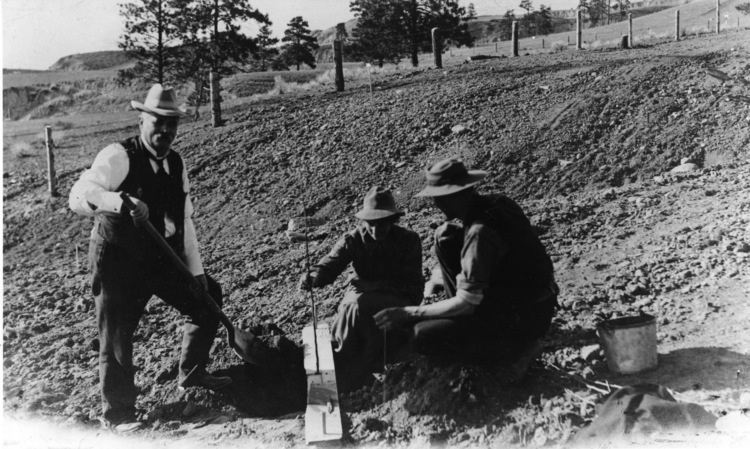
In the orchard display, you will notice how modest was the toolkit of the budding fruit grower. Imagine yourself here, 100 years ago, having recently arrived after a long trip by rail and sternwheeler. Staying at the California Mission style hotel, today the Naramata Inn, you hear proprietor J M Robinson extoll the benefits of the life as an orchardist. Eventually, you buy a nice piece of property and set to work clearing the land and ordering seedlings for your new venture. You may have the help of the "Happyland Boys", a small group of young Englishmen looking for work. A horse or two would be a tremendous help for heavy work like stump pulling and plowing. You come home to a tent house at the end of the day. It will be home for the first couple of years because it provides instant shelter and your priority is to get the orchard into production as soon as possible.
It was in such a tent house that Mrs. Anna Gillespie held a seance one evening in 1907. During the event, she channeled the spirit of an Indian Chief who spoke to her of his beautiful bride, Naramata, the Smile of Manitou. It's not clear whether J M attended the seance or whether he only heard of that evening's events, but he later wrote that he so liked the name that he felt compelled to apply it to the village.
Your horse and equipment would need the services of the local blacksmith, which is our next display. But before you move on, don't miss the long wooden pipe and the barrel in the corner. Both using stave and hoop technology, the former would carry water to your parched land while the barrel symbolizes the transition to grape growing, which began over 40 years ago and has proven very successful and quite possibly, is likely the reason you may be visiting Naramata. The vines growing outside the museum are clones of those first vines planted in Naramata.
Fruit growing was, and is, a perilous pursuit and there have been times when the earnings do not cover the costs of running the orchard. Orchardists to the south, particularly in Washington State, brought their fruit to market 2 to 4 weeks before Naramata's fruit was ripe, by which time the market was saturated.