Entrance
Hello, welcome to the Naramata Museum, operated since 1999 by a dedicated group of local volunteers.
As you came through the doors, you may have noticed photos of ancient petroglyphs. Such evidence reflects the long occupation of the land by indigenous people who called this area "House of the Bald Eagle". We recognize that we are uninvited guests on the traditional territory of the Syilx Okanagan.
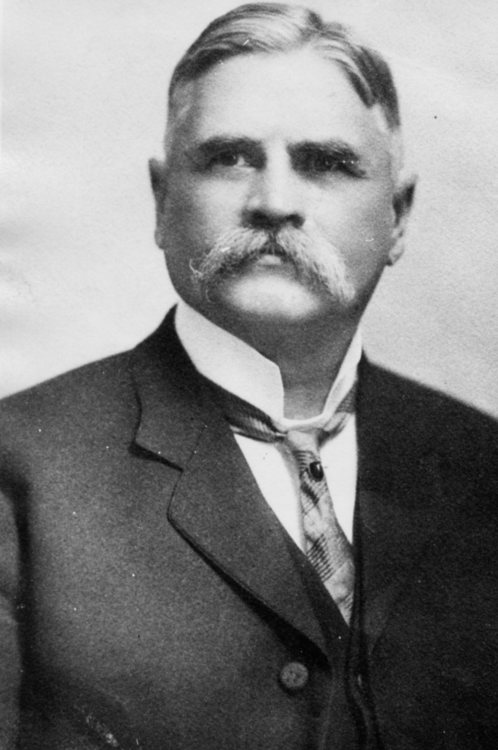
As you look around, you'll notice a large safe which belonged to John Moore Robinson, founder of Naramata in 1907. J M, as he liked to be called, was born in 1855 in Ontario, taught school for four years and then moved to Manitoba in 1879, where he published a newspaper and served as a Member of the Manitoba Legislature.
Seeking mineral riches, he made an exploratory trip to British Columbia in the summer of 1897. That venture brought him into the Okanagan Valley where he became aware how well fruit grew in our ideal climate, giving him the idea that land developed for orchards might be a more lucrative pursuit.
In 1902, he purchased land in Peachland and subdivided it for 'Fruit Ranching'. Soon after, he developed land in Summerland and was elected the first mayor of that community in 1906. From his house located on a vantage point, he looked across the lake to the benchland on the other side and a plan began to emerge: a plan to build a cultured enclave for 'gentlemen farmers'. He purchased 3000 acres from cattle baron Tom Ellis and created East Summerland, the community that would soon be known as Naramata.
J M did everything on a grand scale. You may have noticed the mural on the side of the museum that replicates a notice for a regatta that he sponsored. On pedestals nearby are trophies in his name that were awarded to the champions.
J M also donated a large sum to Canada's war effort. Look up above the doorway and you will see a World War One German machine gun complete with a bullet hole through the water jacket. This was given to J M in recognition for his financial support.
J M Robinson died in 1937 and is buried in Naramata.
Let's move on to the next display.