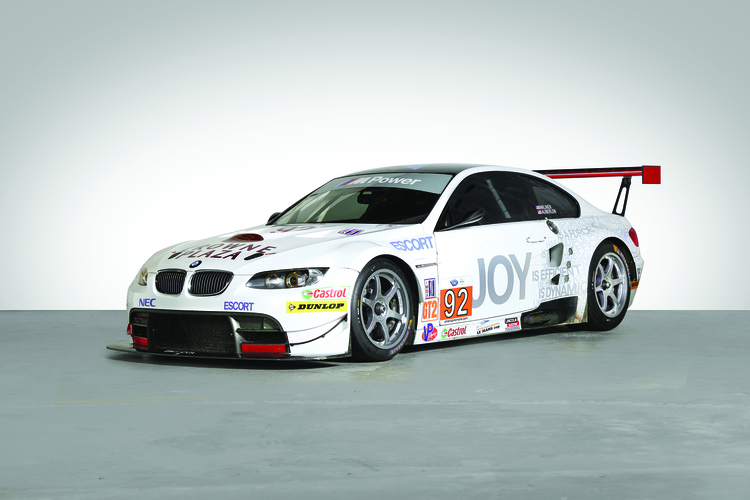
2009 BMW E92 M3 GT
American Le Mans Series “Joy”
CHASSIS#: E92M3 901
ENGINE 4.0-liter P65B40 V-8
OUTPUT 454 hp @ 7500 rpm (restricted) 368 lb-ft
TRANSMISSION 6-speed XTRAC sequential manual
CURB WEIGHT 2600 lbs (Estimated)
BUILD DATE 2009
COLOR Alpine White
OWNER BMW of North America
OWNED SINCE 2009
LOCATION Woodcliff Lake, New Jersey
The E92 M3 GT ran to the edge of the rulebook, bringing the M3 back to GT2 competition after a two-season absence and signaling fresh intent for BMW to return to the pinnacle of GT sports car racing as its ownership of the Sauber F1 Team wound down.
“Back in 2008, BMW decided to leave Formula One [at the end of 2009] and return to its roots, racing GT cars that are closer to what the customer can buy,” Tom Plucinsky, head of BMW Group Classic USA, says. “We introduced the show car in February of 2008. The show car was quite different from the car that actually got homologated.”
The final aero development showed a different car with numerous bodywork changes, particularly behind the wheels.
“The development of that car was pretty extreme,” Plucinsky recalls. “The engine is based on the S65 V-8. It’s called a P65 and removes things like VANOS, which you don’t need because you’re not doing part throttle anymore. It also added a flat plane crank, which allowed a higher RPM limit, as well as provided a bit more torque. The downside is vibration.”
“Same with the interior,” Plucinsky says. “The driver’s seat is mounted in the rear passenger footwell, and the steering column and everything is moved back. You’re sitting a lot lower.”
An entirely new car and partnership with Rahal Letterman Racing did lead to some teething problems. Vibration caused issues with welds breaking and leaks surfacing. However, a season of development can work wonders, and one E92 earned a win in 2009, at Road America.
At the end of the 2010 season, the original E92 GTs were replaced by the significantly updated Evo versions. And even if BMW had wanted to continue running these original cars, the choice would have placed the team at a massive disadvantage.
“Even though they’re massively reinforced with a roll cage, they develop flex over a season,” Plucinsky says. “That flex is good for losing a tenth of a second. And in that class, a tenth is everything. So the chassis only had a lifecycle of two seasons.”
-
1987 BMW E30 M3
-
1989 BMW E30 M3
-
1990 BMW E30 M3
-
1990 BMW E30 M3
-
1991 BMW E30 M3
-
1992 BMW E30 M3
-
1995 BMW E36 M3 GT
-
1995 BMW E36 M3
-
1995 BMW E36 M3
-
1997 BMW E36 M3
-
1999 BMW E36 M3
-
2001 BMW E46 M3 GTR
-
2003 BMW E46 M3
-
2003 BMW E46 M3
-
2009 BMW E92 M3 GT
-
2011 BMW E92 M3 GTS
-
2012 BMW E92 M3
-
2013 BMW E92 M3
-
2014 BMW F82 M4
-
2015 BMW F82 M4
-
2016 BMW F82 M4
-
2020 BMW F82 M4
-
2023 BMW G82 M4
-
2023 BMW M3 G80
-
2024 BMW G80 M3