Las Salinas
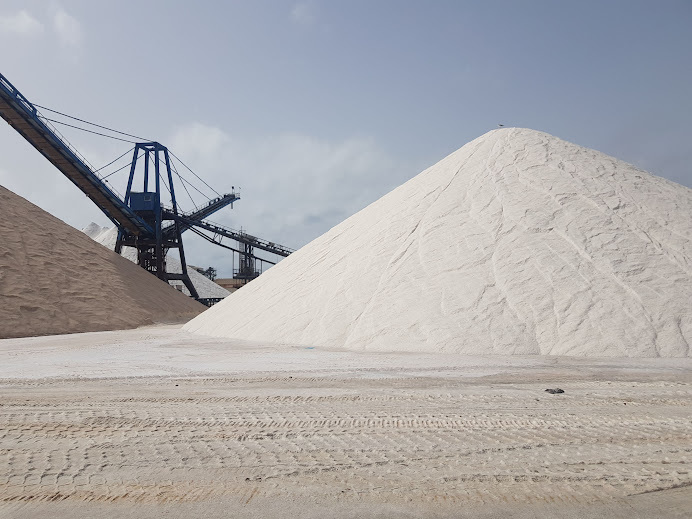
The first origins of salt extraction are not located in the Torrevieja lagoon but rather refer to the La Mata lagoon. In an underwater archaeological survey, remains of what could be a Roman factory were discovered. This important finding allows us to date the beginnings of salt exploitation to at least the 1st century BC.
However, the oldest document on record in which the salt mines are mentioned is a Privilege of Alfonso X, dated January 11, 1273. In it, the residents of the historic district of Orihuela are authorized to take the salt for its consumption of the Salinas de Torrevieja.
The Salinas de Torrevieja and La Mata were part of the immanent royalty of the Crown, being finally ceded in 1321 by the Infante Don Sancho, son of King Alfonso XI, to the Orihuela Council for exploitation.
In 1488, the city of Orihuela gave the Salinas de La Mata to the Catholic Monarchs, who were looking for resources for the conquest of Granada.
In 1766, the State administration began to take charge of the exploitation of the Salinas de Torrevieja and La Mata for the production of salt.
Starting in 1869 with the release of salt, the system of exploitation by lease was introduced with contractual modalities that have been changing and transferring since then between different companies until reaching our days in which New Leasing Company of the Salinas de Torrevieja belonging to the French multinational group “Salins du Midi”, holds the concession.
The total area of the Torrevieja salt flats is 2,100 hectares, of which 700 hectares correspond to the La Mata Lagoon and 1,400 hectares to the Torrevieja Lagoon, occupying 55% of the municipal area, which is equivalent to 2,187 football pitches.
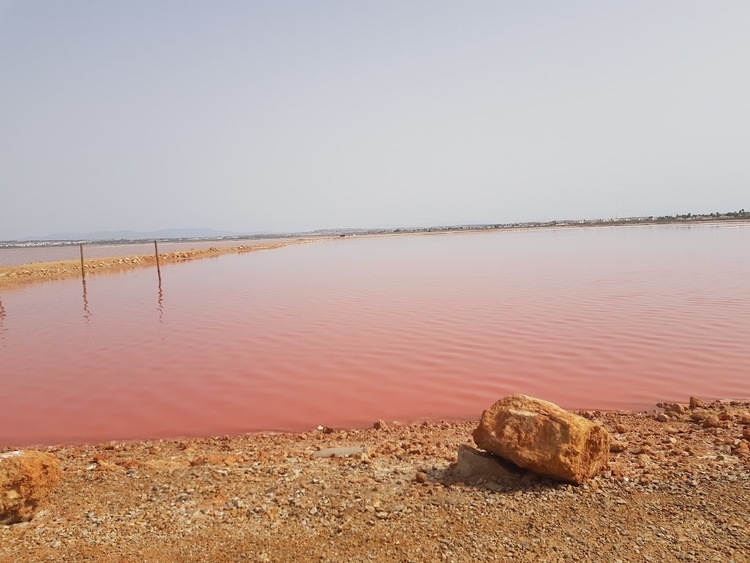
PINK COLOUR
The pink colour of the Torrevieja lagoon is due to the presence of pigments possessed by a series of very peculiar bacteria that inhabit very extreme environments characterized by high salinity. These bacterias are called halobacterias.
Another organism that contributes to this coloration is Dunaliella salina. It is a unicellular alga that produces a pinkish pigment called carotene.
Finally, we highlight the role of Artemia salina, a crustacean that, when feeding on halobacteria and dunaliella, also acquires this pinkish colour.
-
The Hill Intro
-
Long Wharf
-
Directions to Jackson Newspaper Protest Site
-
Jackson Newspaper Protest
-
Directions to Trowbridge Square Park
-
Trowbridge Square Park
-
Directions to Evergreen Cemetery
-
Evergreen Cemetery
-
Directions to Lee High School
-
Lee High School
-
Directions to Oak Street Connector
-
Oak Street Connector
-
Directions to Temple Street Congregational Church
-
Temple Street Congregational Church
-
Directions to the Green (Columbus Day Protests)
-
Columbus Day Protests
-
UPDATE: Columbus Protest Victories
-
Directions to the Green (Occupy Movement)
-
Occupy Wall Street Movement
-
Directions to the Green (CT Students for a Dream)
-
C4D Dream Summit on the Green
-
Directions to Amistad Memorial
-
Amistad Memorial
-
Directions to City Hall
-
City Hall - Elm City Resident Card
-
Directions to New Guinea
-
New Guinea
-
Directions to Superior Courthouse
-
Superior Courthouse - Black Panther Trials
-
Stay at the Courthouse
-
Superior Courthouse - Support for Corey Menafee
-
Directions Back to Trowbridge Square Park or Long Wharf
-
End of the Hill Tour