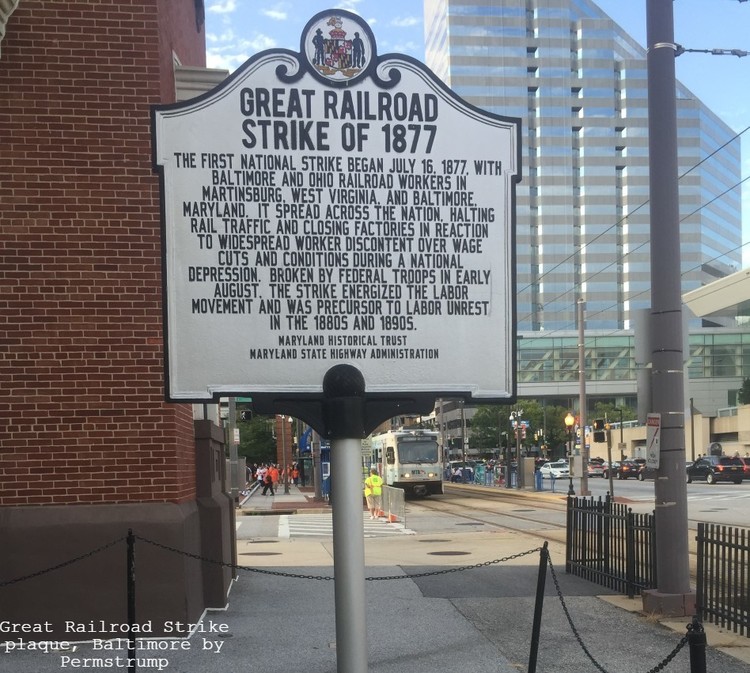
Martinsburg and the Great Railroad Strike of 1877
Railroad companies began cutting worker’s wages starting in 1873 with the Panic of 1873. This recession continued into the summer of 1877. In July 1877 the railroad companies, including the Baltimore and Ohio Railroad Company, announced another wage cut. During a national recession, this left railroad workers financially overwhelmed. It was decided that the wage cut was to take effect on July 16th. On the 16th employees at the Martinsburg yard spontaneously began striking. Employees ceased working and also prevented freight cars from passing through the train yard.
Protests then began in Baltimore, Chicago, Louisville, and Pittsburgh. In these cities, the focus of the protests expanded. Steelworkers in Pittsburgh also started striking, making this an inter-industrial strike. In Martinsburg, Chicago, and Baltimore local and national troops were deployed to end the violence associated with the strikes. By the time federal troops reached Martinsburg the striking and violence had ended, and they found limited resistance.
The protests lasted two weeks and the discontent led to a suspension of the wage cut. This strike also contributed to the creation of industrial unions.
-
Washington Hall
-
McGlothlin-Street Hall
-
Old Campus Residence Halls
-
Integrated Science Centers
-
Andrews Hall
-
Phi Beta Kappa Memorial Hall
-
Morton Hall
-
Jones Hall
-
Small Hall
-
Swem Library
-
Crim Dell Bridge
-
Sadler Center
-
Cohen Career Center
-
Zable Stadium
-
James Blair Hall