Changing Work
How digitalization changed our work?
“The images we show, we digitized all of them. We scanned about 3000 photographs, which took much longer than expected. Now we can show them without printing, which was our choice. We didn’t want to hang physical prints on the walls; instead, we wanted them to be ephemeral, so visitors can choose how long they want to see them.”
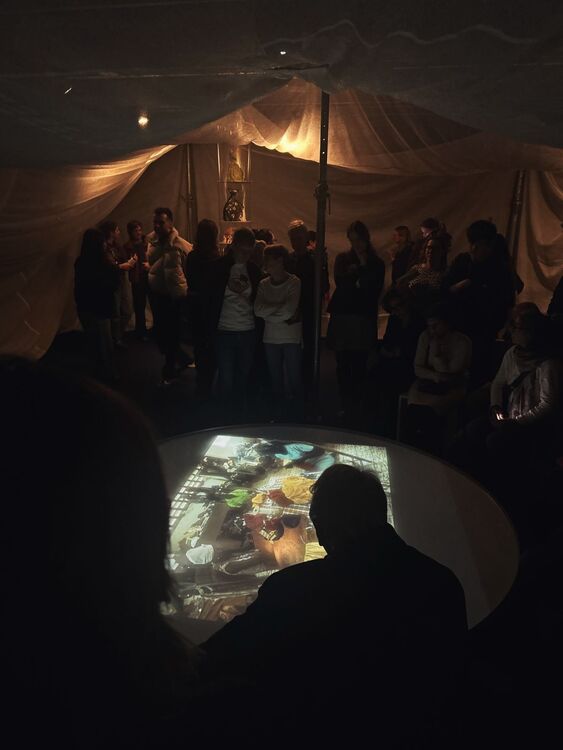
“Printing photographs always turns them into unique art pieces, but here we didn’t want that. The digital format allows a different kind of viewing experience. The projection with water creates a fading effect, almost like a swipe, so people spend more time looking. It’s similar to a screen, and it creates a collective experience: the glowing light reflects on people’s faces, and there’s a shared gaze rather than an individual one.”
“Because we digitized the photographs, the archive can now travel, for example.”
“Regarding social media, as artists, we’re supposed to use it, and we try sometimes, but it’s hard to keep up. Also, for us, it’s complicated: for a long time, and even now, it’s not easy to find out who we actually are online. That’s intentional. We wanted to avoid having a clear identity.”
“The exhibition probably wouldn’t have been even possible without Zoom. We started working in 2021, during COVID. We met … on Zoom and held virtual labs with different experts from various disciplines.”
-
Changing work
-
Changing Work
-
Changing Work
-
Changing Work
-
Changing Work
-
Use of AI
-
Use of AI
-
Use of AI
-
Use of AI
-
Visitor Experience
-
Visitor Experience
-
Visitor Experience
-
Visitor Experience
-
Visitor Experience
-
Museum Online
-
Museum Online
-
Museum Online
-
Museum Online
-
Museum Online
-
Museum Online