Changing Work
To what extent has digitalization changed how I think about and organize exhibition spaces — for example, projecting images instead of hanging physical prints?
“I think we did a big exhibition some years ago, Group Dynamics, which was part of the Museum Global program of the Kulturstiftung. There was a lot of money for five museums to decolonialize collections. The idea was that curators would travel all over the world, look at art, bring some of it back to the museum, and open the museum up globally.
And when we realized this project, Corona happened, and this whole output of curators traveling all over the world and bringing things back was kind of crashed. What happened is that we talked to experts, other curators, artists on four continents. We did a selection of twelve artist schools of the modernist period (1920s to 1970s), and the concept for each section was made via Zoom with all the colleagues. But we did not travel there and make a selection on site (…).
What we did — and I wouldn’t do that again — is that we brought all the artworks to Munich and exhibited them here. So we had transports from Nigeria, from Argentina, from China, from Japan, and so on. It was extremely expensive, kind of absurd. (…) The transport costs were the most expensive thing in the whole project, which is absurd because none of the researchers or curators got that much money.
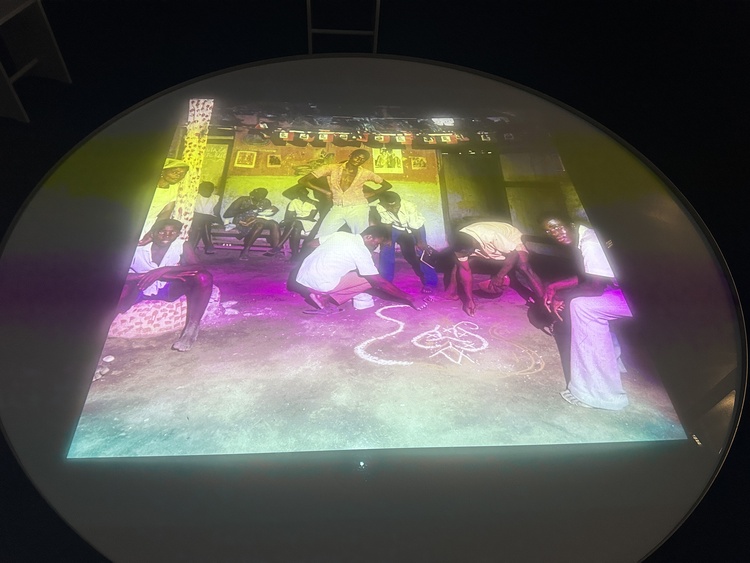
It was eye-opening that you have to find new ways, that you do not always have to work with originals, that you can find new ways to show images. They do not always have to be physically hanging on the wall. That’s also not the ideal approach, and Autofocus is one way of doing it.
Going back from a classical photography exhibition, where the photographs are printed on silver gelatine paper and framed on the wall — but you cannot ask the photographer if the size is correct or if they like the color of the frames (…). I think both the classical hanging of photographs and the projection of photographs in a room are quite a free interpretation of photography.”
-
Changing work
-
Changing Work
-
Changing Work
-
Changing Work
-
Changing Work
-
Use of AI
-
Use of AI
-
Use of AI
-
Use of AI
-
Visitor Experience
-
Visitor Experience
-
Visitor Experience
-
Visitor Experience
-
Visitor Experience
-
Museum Online
-
Museum Online
-
Museum Online
-
Museum Online
-
Museum Online
-
Museum Online