The History of Ball Estates
In 1946, Gordon and Dorothy Ball purchased the estate at the end of Camille Avenue in Alamo, California, where they raised five children and built a life rooted in family, community, and hard work.
Gordon, a second-generation contractor, founded Gordon H. Ball Co., one of the nation’s top heavy construction firms. His company—and later those run For nearly a century, the Ball name has stood for vision, integrity, and enduring craftsmanship. In 1946, Gordon and Dorothy Ball made this estate their home, raising five children and cultivating a life centered on family, community, and hard work. Gordon, a second-generation contractor and founder of Gordon H. Ball Co., played a pivotal role in shaping California’s infrastructure—his company responsible for building many of the highways, bridges, and tunnels that define the state today. It is often said that one cannot travel more than 35 miles on a California highway without encountering a road built by the Ball family.
Yet beyond its professional legacy, the estate itself became a living expression of the family’s values. It served as both a working ranch and a cherished gathering place—home to horses, walnut orchards, and generations of celebrations. From charitable events to weddings and community gatherings, the property embodied a spirit of hospitality and generosity that remains deeply woven into its identity. Dorothy Ball’s passion for design and landscaping brought a distinct beauty to the grounds, which she nurtured and refined throughout her lifetime, leaving behind a legacy of grace and stewardship.
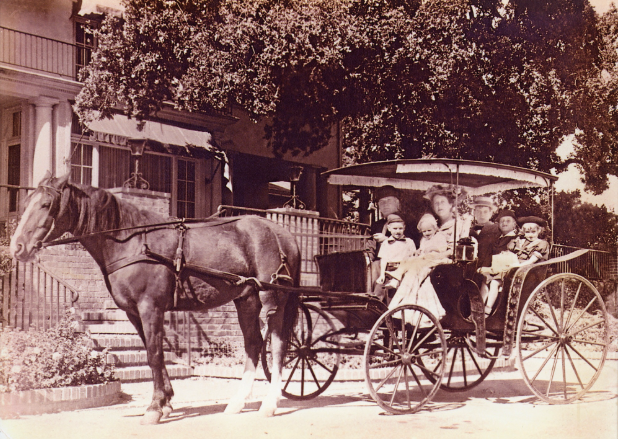
Long before the Ball family’s stewardship, the land carried its own storied past. Originally part of Alamo’s agricultural beginnings, the property was once owned by Camille Grosjean and later by Walter Arstein, president of the Antioch, Oakland & Eastern Railroad. Arstein commissioned renowned architect Arthur Brown Jr.—celebrated for San Francisco’s City Hall and Coit Tower—to design a grand estate residence as a summer retreat in the early 1910s. Over the decades, subsequent owners added their own layers of character, further enriching the estate’s narrative.
When the Ball family acquired the property, they not only preserved its architectural significance but expanded its purpose, integrating it into both their personal lives and professional endeavors. The estate’s original structures—including the main residence, pool house, bar, and barns—remained central to its identity, forming the backdrop for decades of life, work, and community.