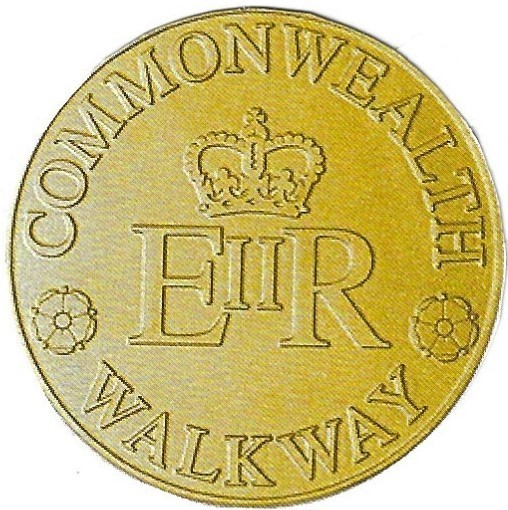
Start - Windsor & Eton bridge
Eton has been a settlement since at least the time of the Saxons, though remains from Roman and Celtic periods suggest an even earlier origin.
It derives its name from Eyot-tun, meaning ‘settlement on an island’.
It was originally bounded by the Thames and several streams, and thus relatively safe from attack.
Some traces of the Saxon settlement survive to this day.
Around the town are large commons and areas of Lammas lands where Eton householders were allowed to graze two beasts between August and October.
At the time of Domesday in ten sixty-six, ‘Ettone’ was listed as having two mills, a meadow, woodland and fisheries.
The settlement first concentrated on the higher land and quickly spread along the present High Street during the Middle Ages in response to the growth of Windsor.
In 1826, a plan to enclose the parish land was rejected by the people of Eton.
As a result, this parish is one of the few still containing Lammas land.
It's one reason why a rail connection to the town was delayed. Eventually though, the Windsor Branch rail viaduct was completed in 1849, running through College land.
These Lammas lands also served to protect the town from encroaching Slough industrialism.
The Thames has always been more of a link than a barrier. Initially, Eton flourished through fish-farming and the stones used to build Eton College Chapel were also conveyed here by barge.
Henry VI founded Eton College by charter in 1440. He was a shy and peace-loving man, then aged 18.
He loved Windsor and so converted the parish church on the other side of the Thames into a Collegiate Church, a corporate body with the right to hold land and collect revenues.
He endowed the Provost and Fellows with considerable estates spread across England.
The King founded not only the school but also created a centre of pilgrimage, modelling the new college on Winchester, founded by William of Wykeham.
Under a decree of the Founder, there were to be 70 King’s Scholars, who were educated for free and housed in College. Outside the College itself, so-called "Oppidans" were lodged in houses in the town and received the same education.
Originally these houses were run by Dames, but more recently by House Masters. Today there are 24 boarding houses for Oppidans and over 1,300 boys in all.
Now, with the castle behind you, go along the High Street to King's Stable street. It's on your right in just 50 metres.
-
Introduction
-
[Red Doors] Station 1: Jesus is condemned to death
-
[Black Lives Matter art, Pride flag] Station 2: Jesus takes up his Cross
-
[Accessibility ramp] Station 3: Jesus falls for the first time
-
[Chicken Coop on Napa] Station 4: Jesus meets his Mother
-
[Epworth Playgroups] Station 5: Simon of Cyrene helps Jesus carry the Cross
-
[Low Water Landscaping, 1926 Napa Avenue] Station 6: Veronica wipes the face of Jesus
-
[Vote Sign, 1918 Napa Avenue] Station 7: Jesus falls for the second time
-
[Stone obelisk, The Alameda and El Dorado] Station 8: Jesus meets the women of Jerusalem
-
[Flag showing solidarity with Ukraine, 1110 The Alameda] Station 9: Jesus falls for the third time
-
[Berkeley Fire Station, No. 4] Station 10: Jesus' clothes are taken away
-
[Dentist office] Station 11: Jesus is nailed to the Cross
-
[Jerusalem Kitchen] Station 12: Jesus dies on the Cross
-
[Northbrae Tunnel] Station 13 & 14: The body of Jesus is taken down from the Cross and is laid in the tomb
-
Closing Reflection