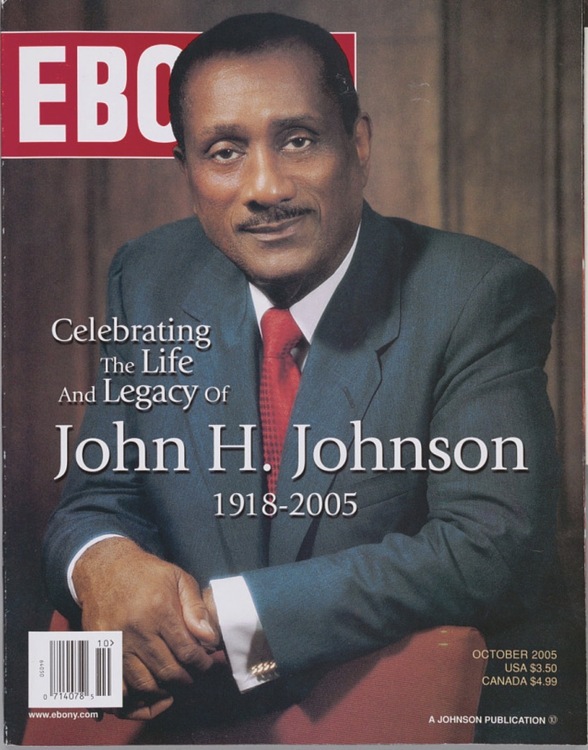



Jet and Ebony magazines: Turned young readers into adult leaders.
During the late 1980s, Johnson Publishing (publisher of Ebony and Jet magazines) was one of the most respected and successful minority owned media corporations in America.
It's flagship publication, Ebony magazine, printed two and a half million copies a month. Jet magazine, even though it was a smaller magazine, it had a bigger distribution than Ebony. Nearly 3,000,000 copies of Jet magazine were being read in businesses and homes across America.
That massive distribution network meant that the Black community had a means by which it could “provide a crucial positive counter/narrative to mainstream media which frequently ignored or misrepresented Black life.”
The leaders and owners of Johnson Publishing knew that by reporting on stories which advanced the social and legislative goals of the black community and by telling the stories of successul black role models, it could inspire future generations of black leaders in America.
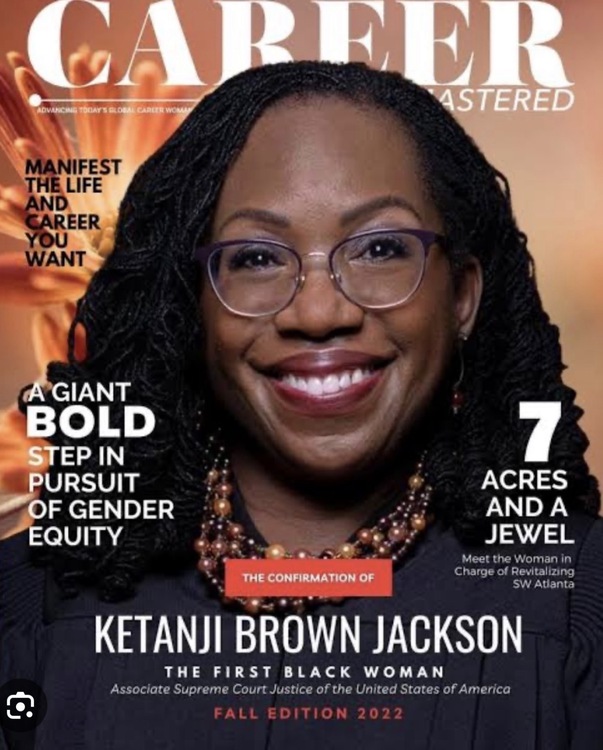
One of the early readers of Ebony and Jet magazine was future Supreme Court Justice Ketanji Brown Jackson. She has recently stated that when she was a child her parents had subscriptions to these magazines.
She has stated that these magazines, actually, had an impact on her career choices. As a child, after seeing Federal District Judge Constance Baker Motley on the cover of Johnson Publishing's popular magazines, she thought to herself “… I could be a judge.”
Interestingly, while Jet and Ebony magazines no longer exist in a printed format, Supreme Court Justice Ketanji Brown Jackson's image can now be seen on the cover of many mainstream national publications. One can only imagine how many young people are now reading about her successful journey and are now thinking to themselves, as she did decades ago, "I could be a judge.”
Welcome to the Seventh Judicial District’s Black History Month Portrait Gallery!
-
Ebony and Jet Magazines inspired and informed a whole new generation of leaders, lawyers and judges.
-
Judge Thurgood Marshall goes from getting revenge to demanding respect.
-
Judge Constance Baker Motley: Climbing ladders and breaking glass ceilings.
-
Judge Jane Bolin: Believed that love and the law were allies.
-
Judge Reuben Davis: Cleared a broad path for others to follow.
-
Chief Judge Rowan Wilson of the New York Court of Appeals: Setting out to do good.
-
Supreme Court Justice Ketanji Brown Jackson: From segregation to the Supreme Court.
-
Robert Morris risked his law license and his own life so that others could have their liberty.
-
Jet and Ebony magazines: Turned young readers into adult leaders.