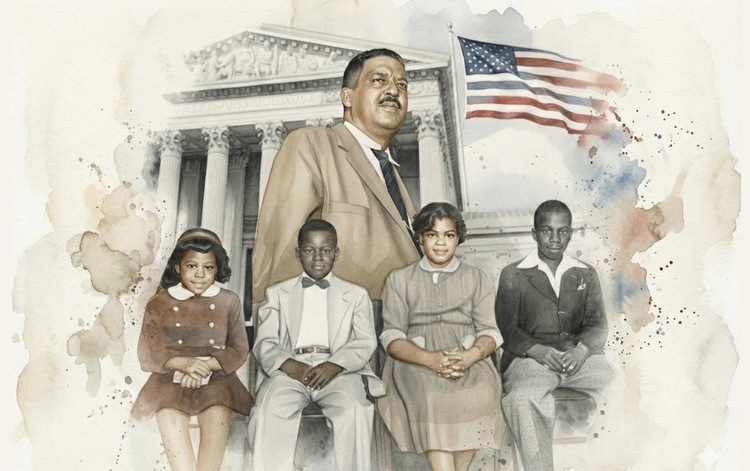
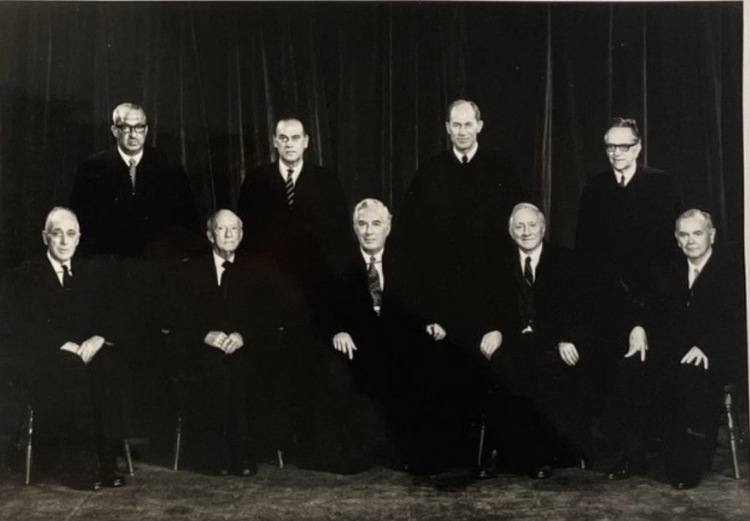
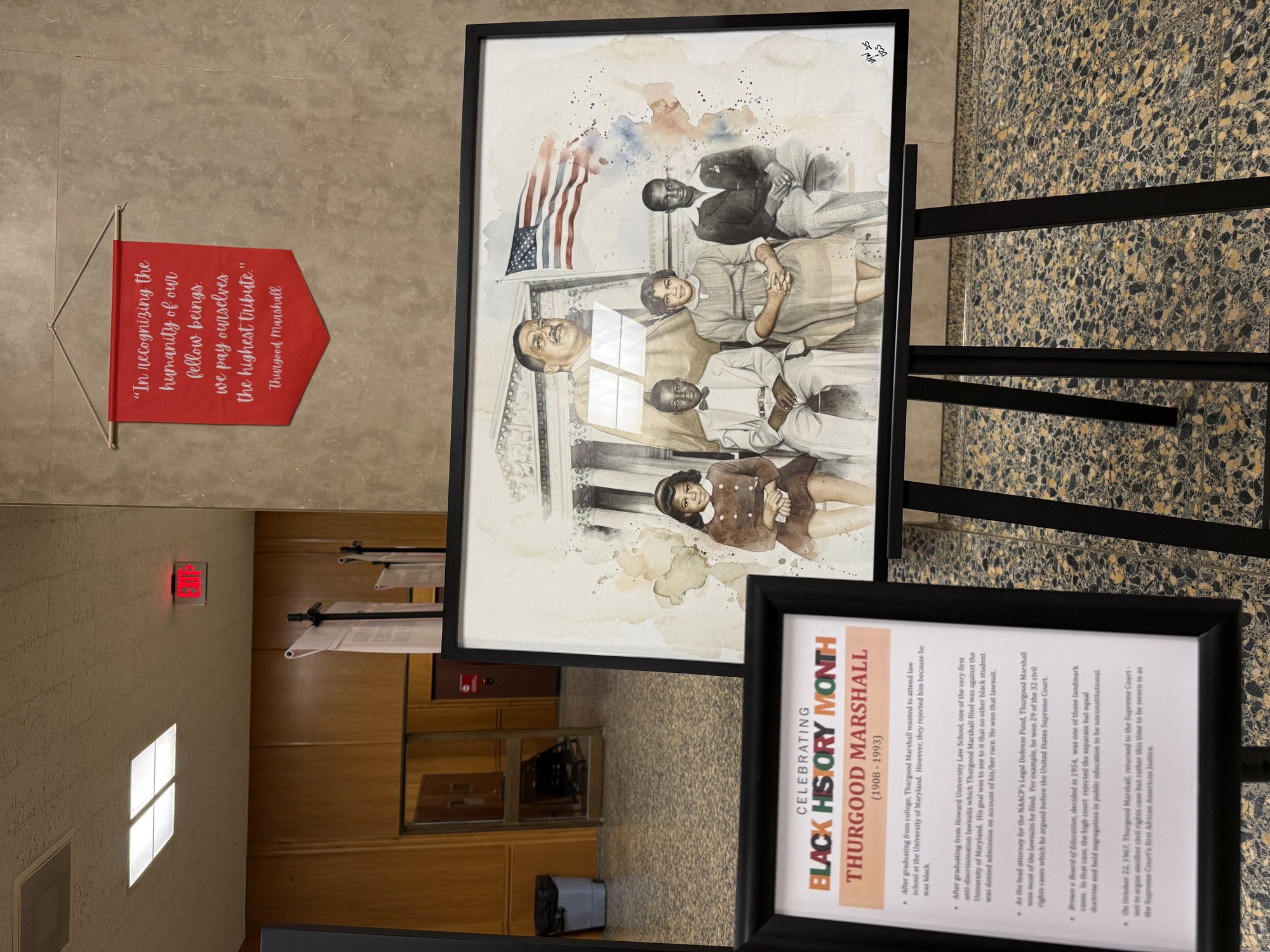
Judge Thurgood Marshall goes from getting revenge to demanding respect.
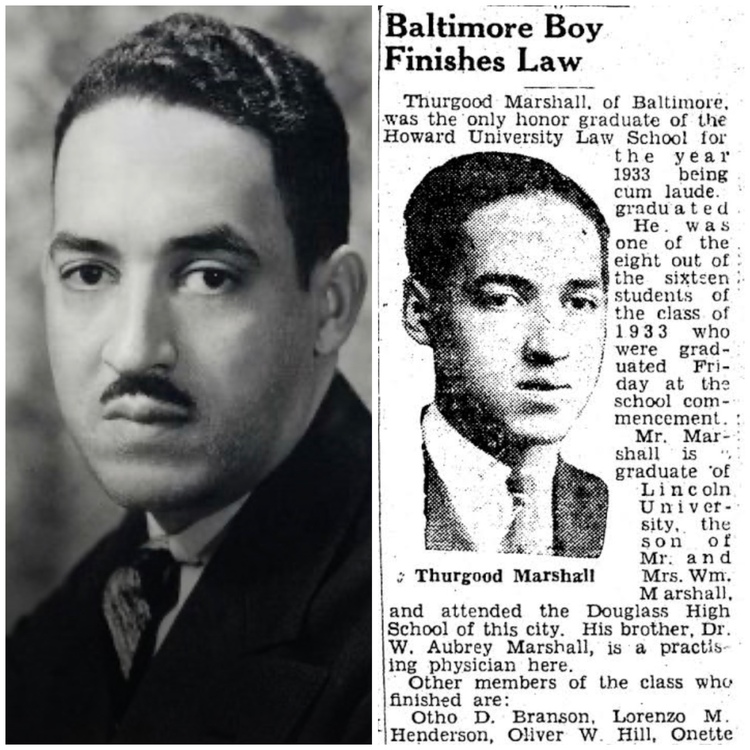
When Thurgood Marshall graduated from college he had hoped to be admitted into the University of Maryland's Law School.
But that was not to be - essentially because the University of Maryland Law School had a policy in place which strictly prohibited black students from attending their law school.
Marshall never forgot Maryland's treatment of him. In fact, after graduating first in his class from Howard University Law school, Marshall vowed to... get even with those bastards.
Indeed, Marshall made good on that promise. In 1935, less than two years after graduating from Howard, Marshall filed and won a major law suit (Murray versus Pearson) which, ultimately, forced the University of Maryland to desegregate and admit black law school students.
Now to be fair, after his success in Murray versus Pearson, Thurgood Marshall didn't spend anymore of his time or talent "getting even" with anyone - much less the University of Maryland.
Instead, as Director and Counsel to the NAACP Legal Defense Fund, Thurgood filed cases across the country intended to dismantle Jim Crow and to end systemic segregation and discrimination in the public and private institutions across America.
In short, it was no longer about revenge it was about respect - respect for the constitutional rights of each and every citizen without regard to their race, creed, gender, or color.
With that goal in mind, Marshall and his team at the NAACP Legal Defense put together a string of landmark legal victories before the United States Supreme Court.
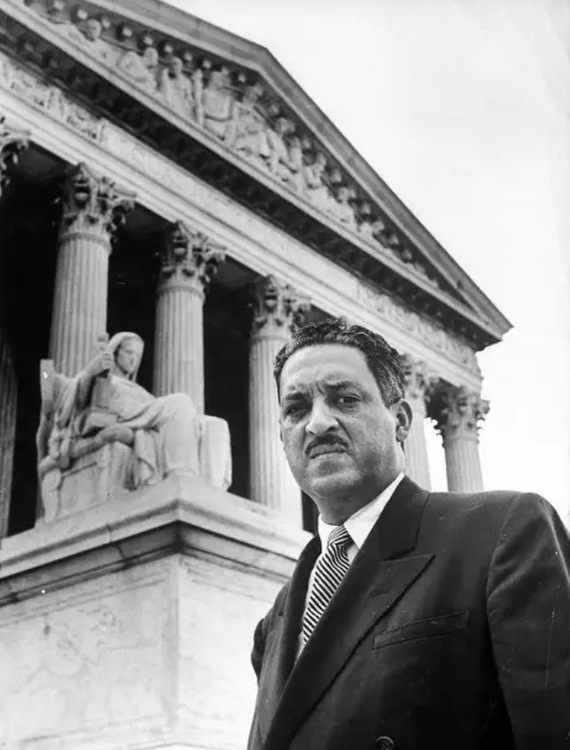
Incredibly, Thurgood Marshall appeared before the United States Supreme Court 32 times and won 29 of those cases.
Included among those significant legal victories were:
Smith versus Allwright (where the high court found that it was unconstitutional for states to exclude black voters from primaries); Shelley versus Kraemer (where the Court struck down race based restrictive housing covenants); Sweatt versus Painter (where the Supreme Court held that separate facilities for black graduate students were unconstitutional); and, of course, Brown versus the Board of Education - where the Supreme Court Chief Justice Earl Warren stated... "In the field of public education, the doctrine of 'separate, but equal' has no place. Separate educational facilities are inherently unequal."
These were great legal victories for Marshall and the Defense Fund Legal team. However, many decades later, Marshall himself wondered "whether racism and prejudice were just a distant memory" or whether America was still "a nation of division - Black versus White, indigenous versus immigrant, rich versus poor and educated versus illiterate."
Marshall delivered those remarks, on the 4th of July in 1992, on the steps of Independence Hall in Philadelphia, Pennsylvania. He concluded his remarks by reminding us that "our fates are bound together" and that "we will only attain freedom if we learn to appreciate what is different and muster the courage to discover what is fundamentally the same."
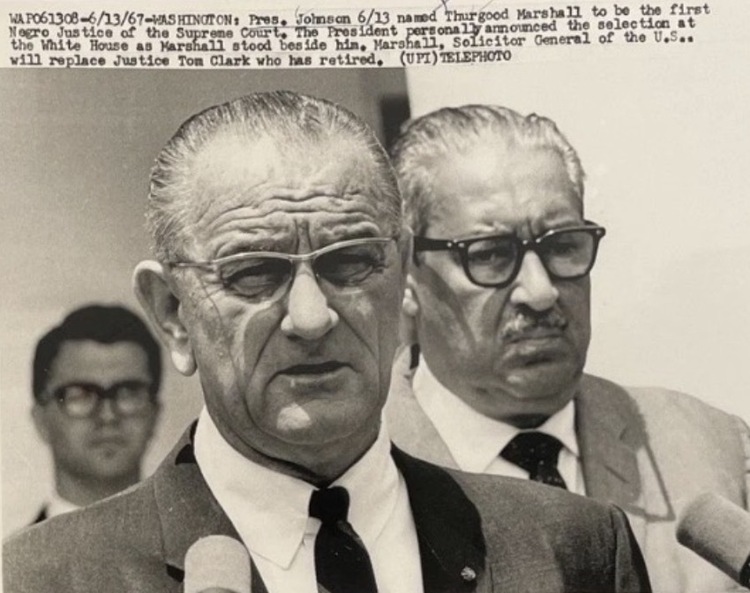
Justice Thurgood Marshall died a little more than six months after delivering those remarks at Independence Hall. However, the advice that he shared that day with America seems just as relevant and impactful today as it was when he delivered those remarks decades ago.
-
Ebony and Jet Magazines inspired and informed a whole new generation of leaders, lawyers and judges.
-
Judge Thurgood Marshall goes from getting revenge to demanding respect.
-
Judge Constance Baker Motley: Climbing ladders and breaking glass ceilings.
-
Judge Jane Bolin: Believed that love and the law were allies.
-
Judge Reuben Davis: Cleared a broad path for others to follow.
-
Chief Judge Rowan Wilson of the New York Court of Appeals: Setting out to do good.
-
Supreme Court Justice Ketanji Brown Jackson: From segregation to the Supreme Court.
-
Robert Morris risked his law license and his own life so that others could have their liberty.
-
Jet and Ebony magazines: Turned young readers into adult leaders.