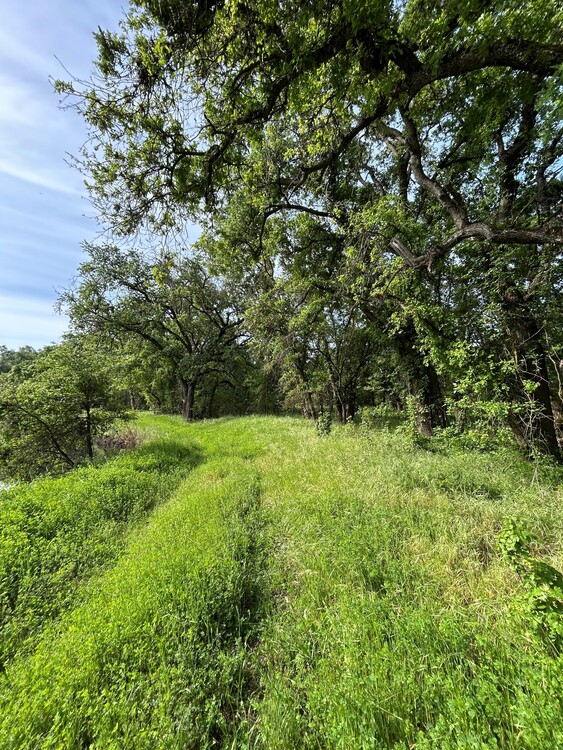
Riparian Habitat
Here along the river’s edge, we’re paddling along a riparian forest — the ribbon of trees and vegetation that grows where land and water meet. At the Cosumnes River Preserve, this habitat is dominated by towering valley oaks, willows, cottonwoods, and sycamores.
Riparian areas are some of the most productive and diverse habitats in California. They provide nesting sites for birds like woodpeckers, yellow warblers, and great horned owls, while the dense understory offers shelter for mammals such as beavers, raccoons, and river otters. Fallen branches and shaded banks also create important habitat for native fish, including Chinook salmon, during their migration.
Beyond supporting wildlife, these forests help people, too. Their roots stabilize the soil, filter water, and provide natural flood protection by slowing and absorbing high flows. Sadly, more than 90% of California’s historic riparian forests have been lost, which makes the restored and protected areas here at the Preserve especially valuable.
As you look around, notice the mix of young plantings and mature trees — a sign of ongoing restoration work that ensures this rare habitat continues to thrive for future generations.