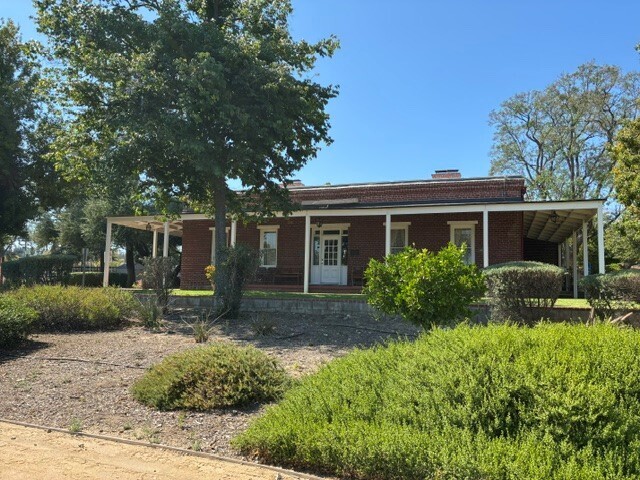
Built to Last
“Building a Landmark”
Before exploring the lives of Maria Merced Williams and John Rains, take a moment to consider the house itself.
When construction began in 1860, this was one of the most ambitious homes in Southern California. Built of brick rather than adobe, the house combined American building techniques with features common to Californio ranch homes. John Rains wanted a substantial brick residence like those he had known in Alabama, while Maria wanted a home organized around a central courtyard, a familiar feature of the ranchos where she had grown up. Together, they created a house that reflected both traditions.
According to local accounts, construction required four bricklayers, nine carpenters, and additional laborers working for about a year. The finished home measured roughly 3,000 square feet, with seven rooms, twelve-foot ceilings, and large windows that filled the interior with light and air.
The materials themselves tell a story of determination and ingenuity. The house contains nearly 289,000 bricks, many produced locally, while lumber had to be hauled from the Sierra Nevada near Lake Tahoe because Southern California lacked large timber forests. The walls were built exceptionally thick, with portions extending several feet into the ground and resting on stone foundations that have helped the structure withstand earthquakes for more than 160 years.
Water was one of the ranch's most valuable resources, and it played an important role in the design of the house. According to local tradition, John Rains used clay pipes to bring groundwater to a cistern in the courtyard. Water then circulated beneath portions of the house, helping cool the interior during the hot summer months. Whether viewed as an early cooling system or simply a practical use of available water, it demonstrates how carefully the home was adapted to Southern California's climate.
The layout also reflected practical concerns. The kitchen was separated from the main living spaces by a brick passageway, creating a buffer between the heat, smoke, and activity of food preparation and the family's living quarters. According to local tradition, this arrangement also helped reduce the risk of fire spreading through the house.
Even the roof tells a story. According to the site's oral history, the roof was waterproofed using natural tar from the La Brea Tar Pits in Los Angeles. A piece of that tar is still displayed in the house today. Long before modern roofing materials existed, natural asphalt was an important building resource throughout Southern California.
More than 160 years later, the Maria Merced Williams and John Rains House remains one of the oldest surviving brick residences in Southern California. It stands as a remarkable example of craftsmanship, innovation, and cultural blending during California's transition from the Rancho era to the American period. Before moving on, take a look at the brickwork, the courtyard, and the scale of the building. They remind us that this house was built to be permanent—and against the odds, it still is.
-
Built to Last