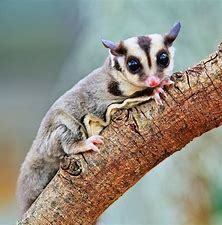
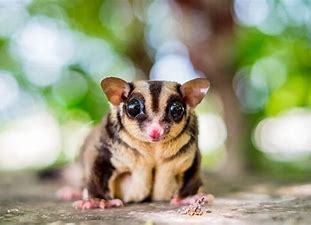
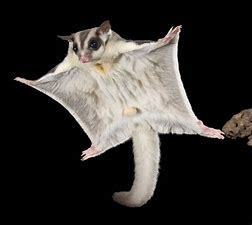
The sugar glider (Petaurus breviceps) is a small, omnivorous, arboreal, and nocturnal gliding possum belonging to the marsupial infraclass. The common name refers to its predilection for sugary foods such as sap and nectar and its ability to glide through the air, much like a flying squirrel. They have very similar habits and appearance to the flying squirrel, despite not being closely related—an example of convergent evolution. The scientific name, Petaurus breviceps, translates from Latin as "short-headed rope-dancer", a reference to their canopy acrobatics.
Sugar gliders are distributed in the coastal forests of southeastern Queensland and most of New South Wales.
The sugar glider is nocturnal; its large eyes help it to see at night and its ears swivel to help locate prey in the dark. The eyes are set far apart, allowing more precise triangulation from launching to landing locations while gliding.
Each foot on the sugar glider has five digits, with an opposable toe on each hind foot. These opposable toes are clawless, and bend such that they can touch all the other digits, like a human thumb, allowing it to firmly grasp branches. The second and third digits of the hind foot are partially syndactylous (fused together), forming a grooming comb. The fourth digit of the forefoot is sharp and elongated, aiding in extraction of insects under the bark of trees.