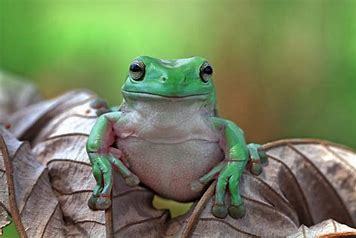
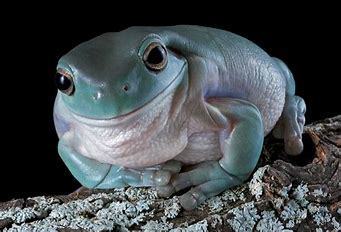
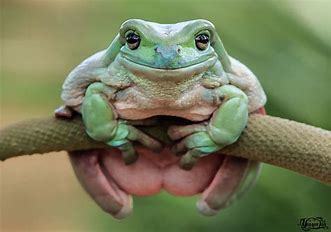
White's tree frog, or dumpy tree frog, is a species of tree frog native to northern and eastern regions of Australia and to the lowlands of New Guinea, mostly to areas with warm, wet tropical climates. During the day, they find cool, dark, and moist areas, such as tree holes or rock crevices, in which to sleep. They are not a rainforest species, but make use of the rain that falls almost daily and collects on leaves and in crevices, to keep themselves moist. Their skin exudes a waxy coating that helps prevent evaporation. In dry periods, they avoid desiccation by concealing themselves in a cool spot, perhaps by burrowing, and enveloping themselves in a cocoon made of shed skin and mucus.
The diet of the tree frog consists mainly of insects such as moths, cockroaches, and locusts. They also eat spiders and can include smaller frogs and even small mammals, including bats, among their prey. Frog teeth are not suited to cutting up prey, so the food item must be small enough to fit inside its mouth. Many frogs flick out their sticky tongues at prey and the victim sticks to the tip and is drawn back into the mouth and consumed. A White's tree frog uses this technique for smaller prey; for larger items, however, it pounces, then pushes the prey into its mouth with its hands.