

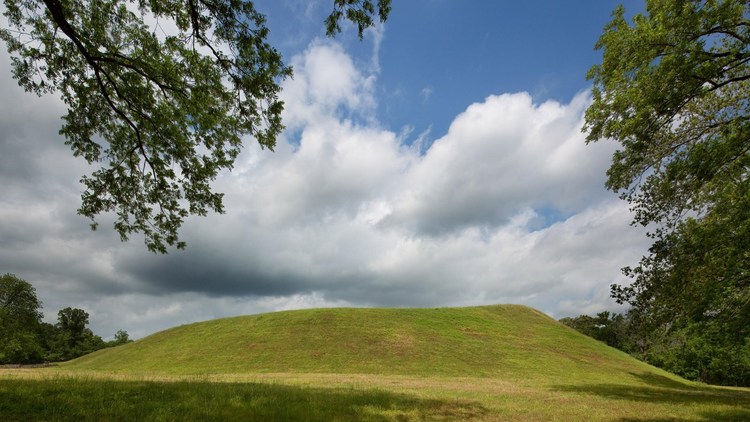
This next site is one of the highlights of the parkway. Emerald Mound is the second-largest Mississippian Period ceremonial mound in the United States. Built and used between the years 1200 A D and 1600 A D, this 35-foot-high mound covers eight acres and measures 770 feet by 435 feet at its base. Two secondary mounds sit on top of the primary mound, bringing the total height to approximately 60 feet. Early records suggest there were six, smaller mounds located along the sides of the primary mound, but visual evidence of these smaller mounds has long since disappeared.
The builders of these flat-topped mounds are called Mississippians, named for the concentration of their villages and mounds in the Mississippi River Valley.
Imagine groups of people walking with empty baskets, looking for the perfect location to collect soil for building the mounds. Once found, they would most likely use digging sticks or their own two hands to collect soil, load up their baskets, and walk back to their village. Baskets would have been emptied, soil stomped down, and the process repeated over and over again to create a mound that was 35 feet high. Try to imagine how many countless hours it must have taken the entire village to create these mounds.