

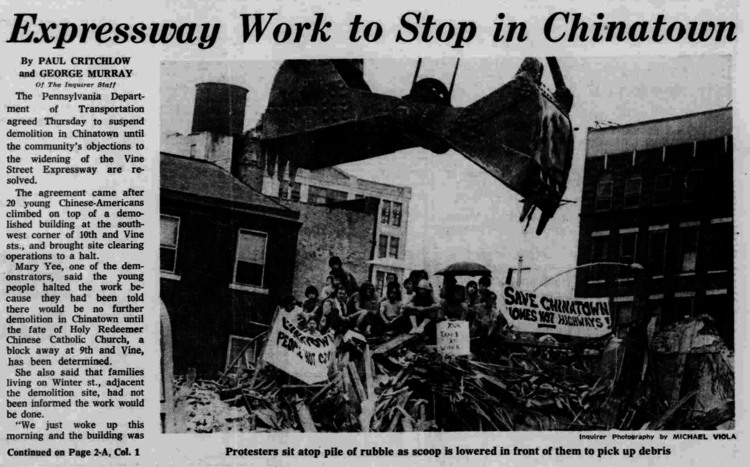
This intersection is another potent symbol of Chinatown's resistance and development in response to urban renewal. To the north of here, the depressed Vine Street Expressway, built in the 1980s after many delays resulting from community agitation, seemed to establish a firm northern border for Chinatown. However, the expressway we know today occupies a smaller footprint than the State of Pennsylvania, which built it, originally intended. The photo shown here depicts a 1973 occupation by activists of a demolition site at the intersection where you are now standing. Community activists helped force a redesign of the expressway so that it would be less intrusive, including the decorative noise barrier wall along the north side of Winter Street. A large mural at the southeast corner of this intersection now commemorates the resistance of these activists and others in the Chinatown community.
Some of the activists shown in the photo were university students of Chinese heritage involved in the Yellow Seeds movement, which produced the flyer shown in the previous tour stop. The Yellow Seeds’ direct action was only one manifestation of the “Save Chinatown” protest movement. Older community leaders did their own organizing using Chinatown’s pre-existing social and business networks, which date to the earliest days of Chinatown and are themselves networked to related groups in other North American cities and in China itself. To this day, throughout Chinatown you will find the headquarters of social and business groups, such as the Tsung Tsin Association, an association of Chinese who speak the Hakka dialect, which owns the large brick building just east of the mural. This and other groups organized on regional, surname, dialect, and business lines together make up the Chinese Benevolent Association (CBA), a group which traditionally represents Chinatown’s interests to the broader community, and which founded the Philadelphia Chinatown Development Corporation.
Image source: Philadelphia Inquirer, August 3, 1973